
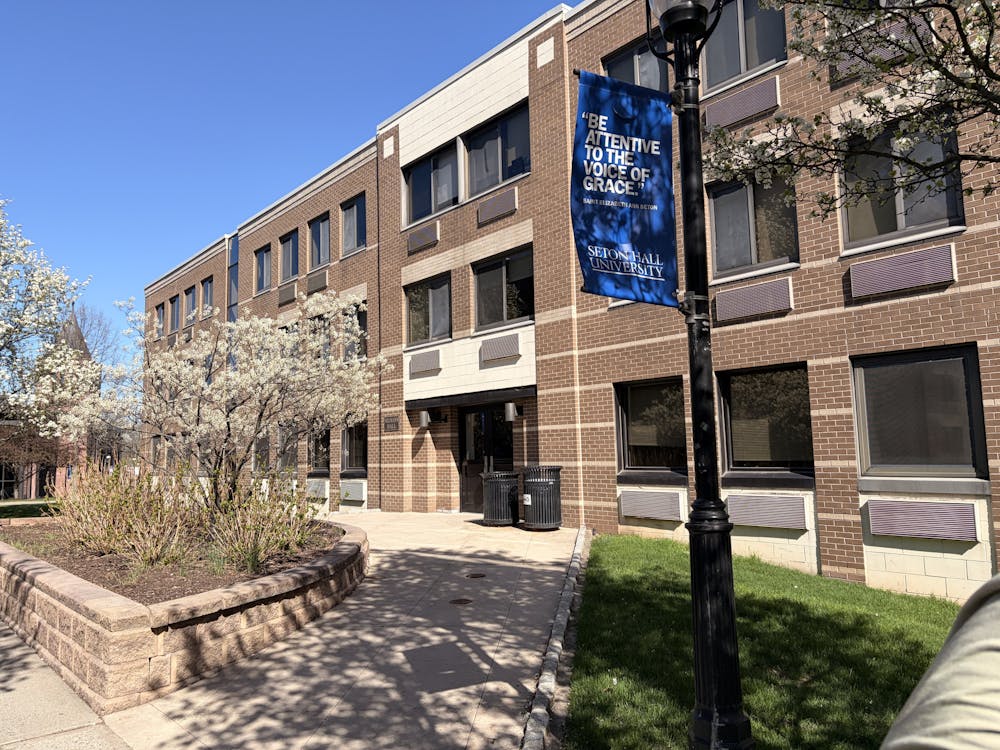
With the April 26 on-campus housing deposit deadline approaching, Seton Hall students are deciding where to live next year.
On-campus upperclassmen housing options are limited; students can choose between Xavier, also known as “X,” or The Complex, which is comprised of three buildings: Cabrini, Serra and Neumann Halls. Students who decide to live off campus may choose from university-affiliated housing options, including Ora and Turrell Manors, or from the various apartments and homes in the South Orange area.
Sydney Grieshaber, a freshman international economics and international relations major, said the decision to live on-campus next year was easy.
“It’s just so much easier to be here—to have my meal plan, to not have to worry about cooking or getting to campus, especially during the wintertime,” she said.
After touring both The Complex and Xavier Hall, Grieshaber said she is leaning toward Xavier Hall.
“I was not impressed by The Complex,” she said. “It felt a little bit dingy [and] small.”
Contrastingly, Grieshaber thought the jack-and-jill room layout in Xavier was much more spacious.
“You just have a lot more space, and you can do so much more,” she said.
Additionally, while The Complex shares one lounge between all three buildings, Xavier Hall has multiple lounges and even a recreation room. Jimmy John Ting, a freshman biology major, hopes to live in Xavier next year for exactly that reason—its extra amenities.
“I feel like there’s a lot of stuff there compared to the other housing,” Ting said.
“X has a lot more,” Grieshaber agreed. “It's really not a competition there.”
For Rachele Bifulco, a sophomore in the 3+3 political science and law program, the decision to stay on campus or move off campus has been more difficult. She and her roommates are currently deciding between Xavier Hall and Turrell Manor.
Bifulco said she and her roommates prefer Turrell Manor.
“The quality of the housing is better,” Bifulco said. “There are better living spaces. There are kitchens as well, which is really cool.”
However, housing quality is only one part of the decision. Cost is another major factor students must weigh.
A single or a double in Xavier Hall costs $8,250 or $6,550 per semester, respectively. In Turrell Manor, a single or a double costs $9,700 or $8,550 per semester, respectively.
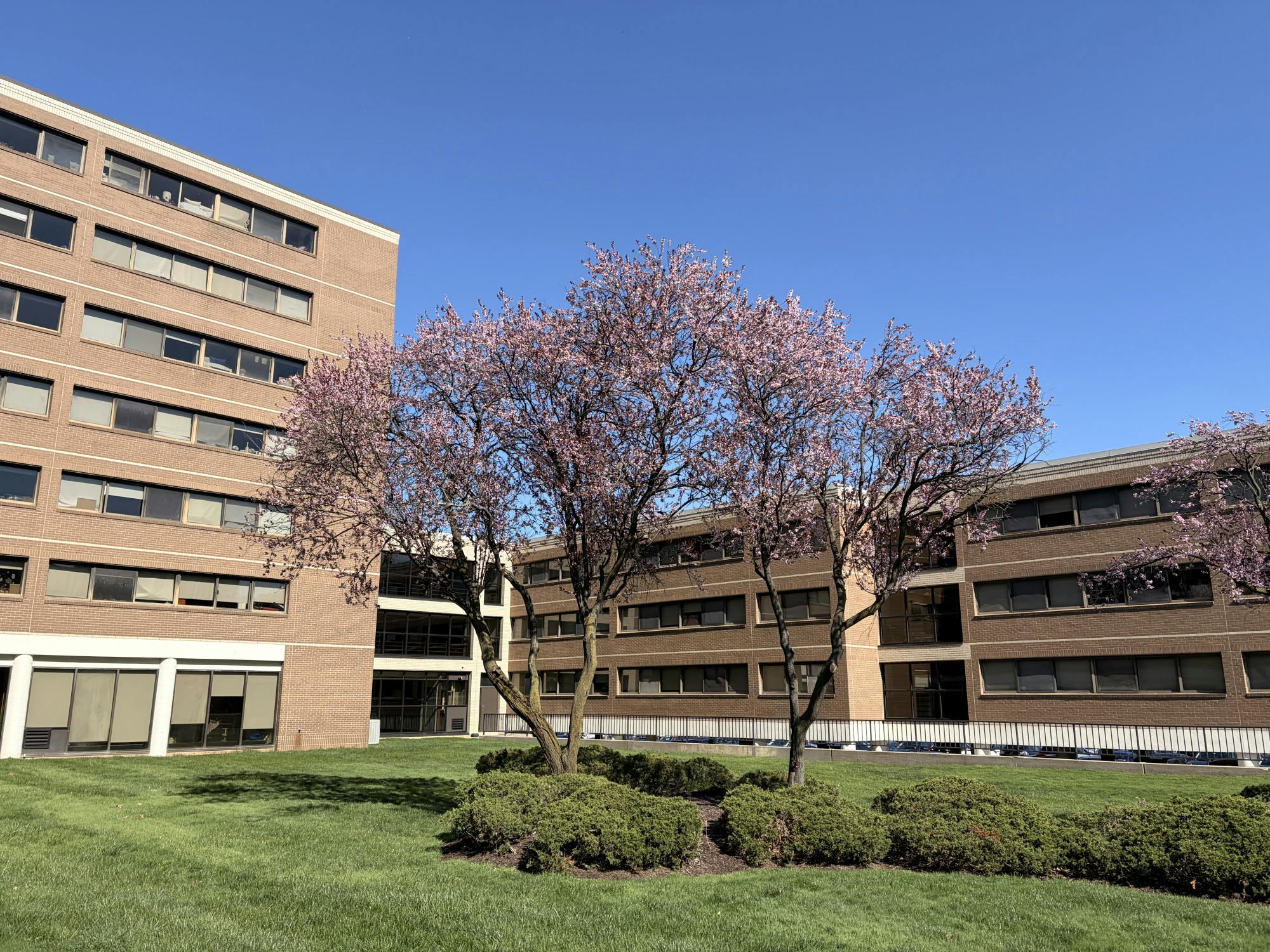
Xavier Hall | Photo by Abiha Rupani
While Turrell Manor’s flat rate is higher, students living on campus must also factor in additional expenses such as break housing and mandatory meal plans.
Students who cannot return home during Thanksgiving, winter or spring breaks are charged $45 per night to stay in the dorms.
“I feel like [the break housing fee] kind of forces you to go back home,” Ting said.
Returning home is not always realistic or ideal for students, especially during shorter breaks. Grieshabe
r said she was unable to return home for spring break and had to pay the break housing fee.
“It adds up pretty quickly,” she said. “I can definitely understand how not having to pay for that would be an appeal to move off campus.”
Another cost students must consider is the mandatory meal plan, which ranges from $3,050 to $3,595 per semester.
“The meal plan is also pretty expensive, and I think the quality of the food is not always up to par with what we’re paying,” Grieshaber said.
Taking these additional expenses into account, Bifulco said she and her roommates would save a few hundred dollars per semester by living off campus. However, off-campus living also comes with added responsibilities.
“After groceries and having to cook, I’m not sure if [it’s] worth it,” Bifulco said.
For some students, the decision also comes down to how connected they feel to campus.
“I feel like if I lived off campus, I’d stay off campus,” Ting said. “I am connected to the campus a lot because I’m living here.”
For Grieshaber, that sense of connection was a deciding factor in her decision to remain on campus.
“The connectedness was definitely a big part of it,” she said.
Although Bifulco believes she would stay involved regardless of where she lives, she still prefers to be close to campus.
“I tend to stay out pretty late, and so it’s a necessity for me that I’m close by,” she said.
For commuters like Justin Del Valle, a senior theater major, and Adam Arriola, a freshman psychology major, living close to campus is not an option.
After living in Boland Hall during his freshman year, Del Valle became a commuter.
“It was a lot financially,” he said. "My parents just thought it would be easier on everyone if I could just drive here.”
Arriola also commutes for financial reasons.
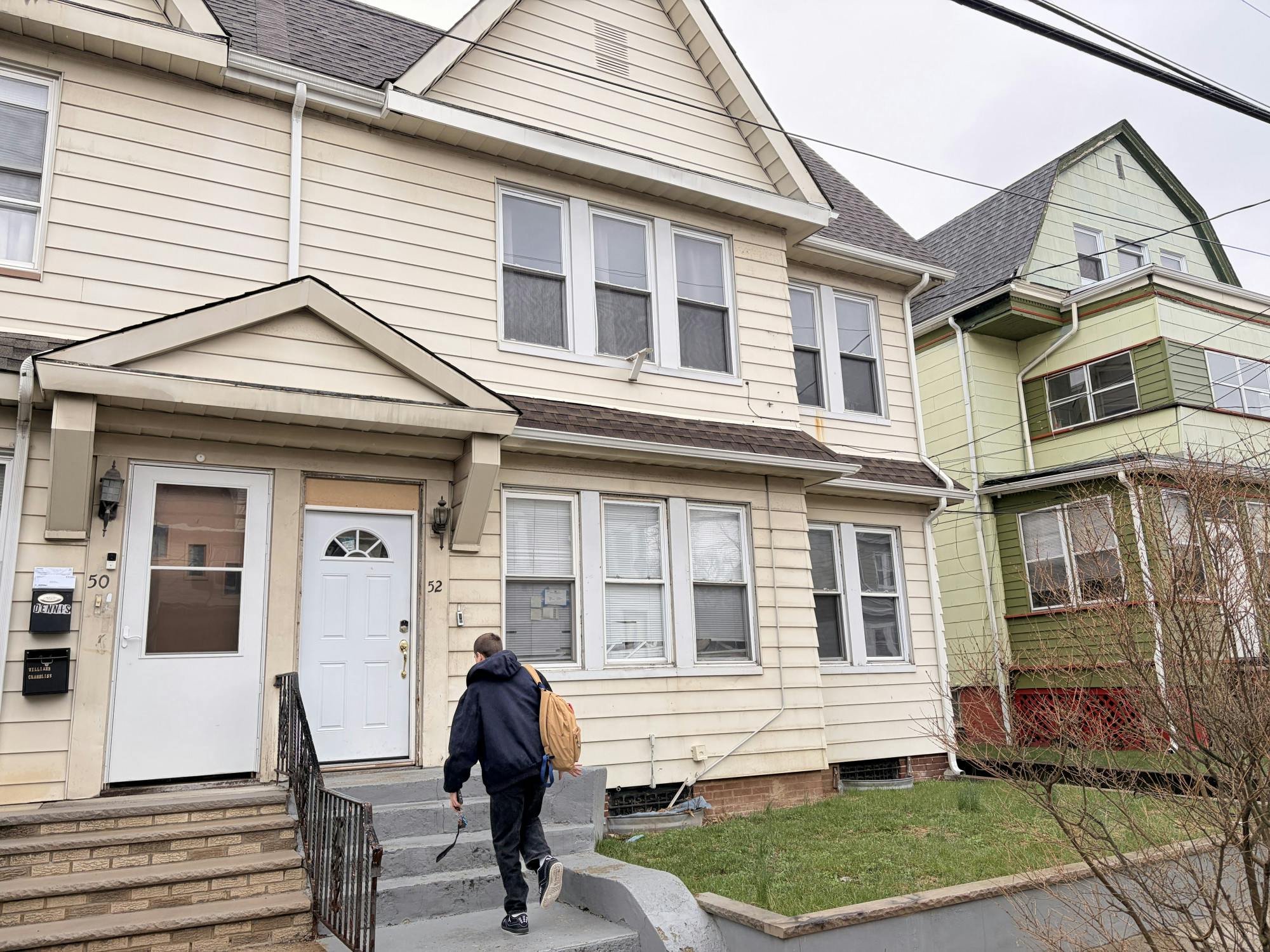
Student's Apartment Off Campus | Photo by Abiha Rupani
“For now, commuting is the best option,” he said.
Still, commuting comes with its own expenses. With gas prices rising in recent months, driving to campus has become more expensive.
“I feel like everybody’s really scared of how expensive the dorms are, but right now commuting, I think, actually fits the cost,” Del Valle said.
“I feel like a lot of commuters here are going to start to suffer,” Arriola added. “If it gets worse, I don’t know how [students are] going to feel about commuting.”
Students living off campus must also consider the broader cost of living. According to Salary.com, the cost of living in South Orange is 21% higher than the U.S. national average and 76% higher than New Jersey's state average. New Jersey itself already has one of the highest costs of living in the country.
“If you want to pay for an apartment right now, it’s the exact same thing as just buying a dorm here,” Del Valle said.
Even so, commuting has its benefits. In addition to living with his family and being close to his friends, Arriola enjoys having his own space at home that he does not have to move into or out of like students must do in the dorms.
“It’s so hectic moving in,” Arriola said. “I don’t have to go through all of that.”
Del Valle said he also appreciates the quiet of living off campus.
“I remember my first year that there was a lot of noise going on in the halls,” he said. “Sometimes I kind of just want to wind down. I have a social battery, and I want to recharge in my own space.”
Still, commuters can sometimes feel disconnected from campus life.
“When I first came to campus, I felt [like] more of an outsider,” Arriola said.
After joining extracurricular activities and reaching out to friends, he said he feels more involved.
“You don’t have to think that your options are limited because you’re a commuter,” Arriola said. “Go the extra mile as if you were living on campus. Step out of your comfort zone because it’s honestly worth it more to try than to sit back and have regrets.”
Del Valle echoed that sentiment.
“Living off campus, you might feel like you’re not a part of the campus, but you are,” he said. “Commuters should feel that there’s still a community here for you. You’re still a pirate even though you travel vast seas.”
Carly Hunter is a writer for The Setonian’s News section. She can be reached at carly.hunter@student.shu.edu.


