
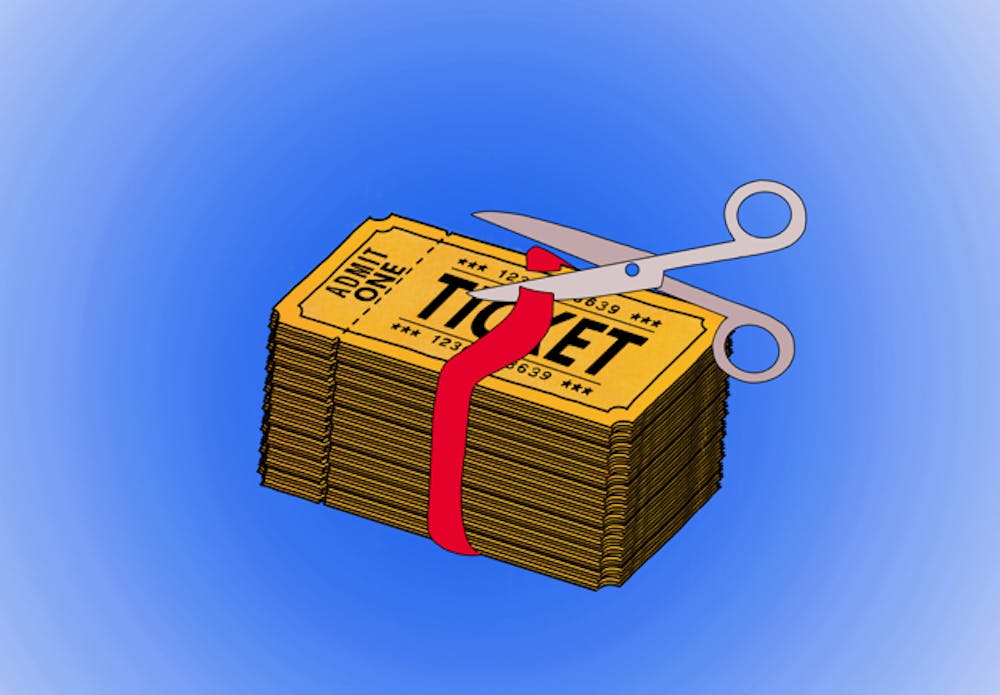
The highest quality meets the highest prices for movies released in limited IMAX theaters, like “Dune: Part Three’s” exclusive ticket drop, giving limited-time merch, expansive seating, and a special 70mm screen for the best quality film.
Although the film’s official release is not until Dec. 18, tickets sold out for most of these theaters within one hour, creating a dangerous precedent for movie marketing going forward.
A similar advanced screening event for Christopher Nolan’s upcoming film “The Odyssey” sold out in 20 minutes, raising the pricing of third-party tickets and restricting the availability of the event from public audiences.
Turning the screening of upcoming movies into an exclusive, premium event transforms what is supposed to be a recreational activity into an exclusive, gatekept event.
Much like concerts, tickets for these events are being resold at higher prices. Many websites reported seeing ticket prices for up to $1,000 for this exclusive “Dune: Part Three” screening.
IMAX theaters have little to no restrictions at all on their websites when it comes to preventing scalping, allowing users to pick as many seats as they please with no restraint. This cultivates an environment where movie tickets can be targeted by third parties.
Worse yet, these theaters have a very limited number of seats to begin with—unlike concert venues, which hold more people. Concert venues increase the odds of not having to pay for a scalped seat. This lack of restriction for IMAX theatre event screenings is turning the process of seeing a movie into an unfair, stressful nightmare.
Furthermore, the level of accessibility for these tickets is ridiculously low. Only 31 of these theaters exist worldwide, with 22 of them based in major cities throughout the U.S., like Los Angeles, being home to three of these theaters alone, whereas many states in the U.S. don’t even have the opportunity to attend these screenings without air travel.
This makes the insecure nature of high-resolution screenings even worse, as a problem not only faces moviegoers who can afford to attend but also concerns those who cannot attend.
Movie theaters are supposed to be public spaces for recreational entertainment, where people can easily go to their local theater with friends, family, or even by themselves and have a good time at the movies. It should not be a stressful exclusive event for those who can attend certain screenings.
Situations like “Dune: Part Three’s” exclusive event window set a dangerous precedent for the way movies are marketed for the future. If studios and theater companies do not recognize the danger of making screenings exclusive and open for scalpers while the industry is already in great danger, they will lose their entire audience moving forward, and the theatrical experience may not survive the blow.
Carmine Sortino is a writer for The Setonian’s Opinion section. He can be reached at carmine.sortino@student.shu.edu.


