
Food plays a big part in our lives; it keeps us nourished, plays a central part in many cultures, and brings people together.
Dining off campus is a large part of Seton Hall culture. On the weekends, you might see bikers with coolers on the back of their bikes delivering food or cars waiting outside of Aquinas Hall waiting for a student to pick up food.
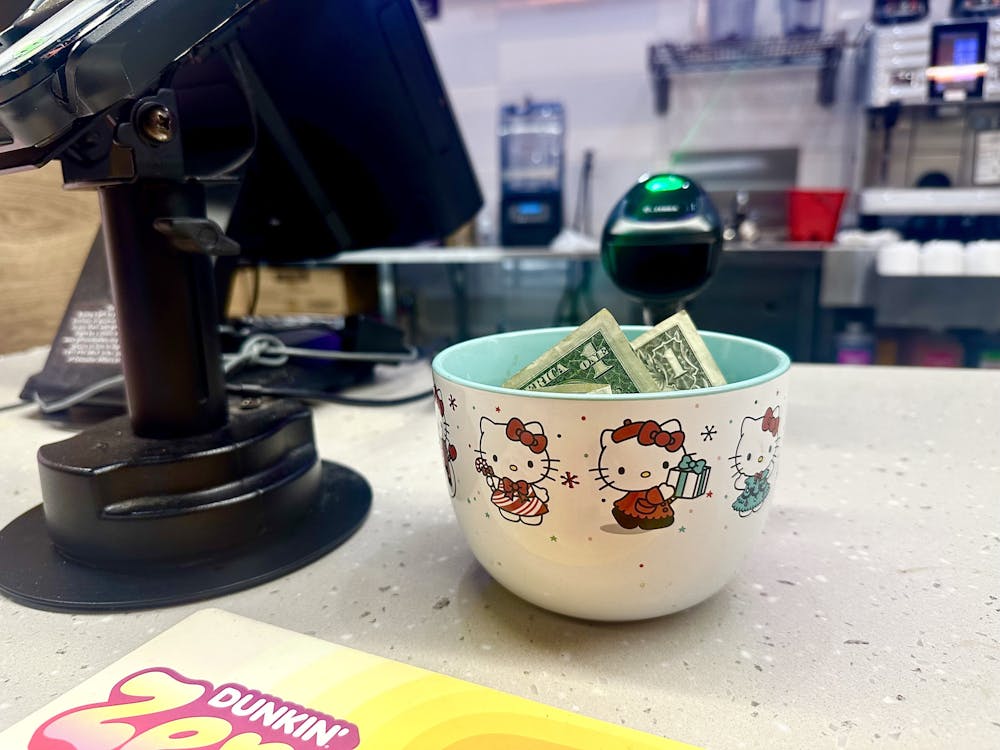
Brunch spots in the village, such as The Order and Jackie & Sons, are popular spots for students to eat at. As college students, money is often tight, making tipping culture difficult to keep up with. In the U.S., tipping culture is a topic of controversy among both diners and service workers.
According to a 2025 Bankrate survey, 63% of Americans “hold at least one negative view about tipping,” which was up 4% from 2024. With over half of Americans holding at least a somewhat negative view of tipping, college students have their own opinions on tipping.
Students at SHU may tip at restaurants for the service provided, but many also make up a fraction of service workers on the receiving side of tips.
Liliana Falcone, a junior nursing major, works at a restaurant in her hometown over the summers and believes that tipping 20% is the minimum when eating at a dine-in restaurant.
“Being nice, going out of your way to be polite, and hanging out with them if they’re a talkative group, people usually appreciate,” Falcone said. “It’s really disheartening [to receive a small tip] when you’re running around and even if you forget something, there’s a lot of behind-the-scenes that happen which you might not see.”
John David “JD” Otalora, a junior biology major who works part-time at a diner where tipping is “almost always expected.” Where he works, “most people leave around 15 to20%, and sometimes more if the service was really good,” Otalora said.
Personal service can generate more tips, according to Otalora.
“Be attentive to customers, refill drinks quickly, and check in without being annoying,” Otalora said. “Being friendly and making small conversation usually helps too because people tip more when they feel like the service was personal.”
When it comes to tipping expectations from customers, Otalora said he “usually expects some kind of tip since that’s a big part of how servers make their money,” but he also understands that sometimes people do not tip, and in those cases, he takes on the “it just is what it is” mentality.
Going out to eat in college can affect budgets and the frequency with which people go out to eat.
“When I go out to eat, I always factor in the tip because I know how important it is for service workers,” Otalora said. “Sometimes it means I go out less or choose cheaper places so I can still tip properly.”
Jackson Norton, a junior finance and marketing major, agrees. Norton said tipping is more about the standard than the service.
“As somebody who was raised in the South, we’re raised to be hospitable,” Norton said. “Tipping 20% isn’t really a reflection on anyone’s specific performance, so if you can’t afford to tip 20%, then you shouldn’t be going out to eat anyway.”
Tipping has many complex cultural layers for people dining in the U.S. Some see it as an obligation to service workers, while others see it as a reflection of service. Some see it “as a little bit of both,” like Otalora.
“It’s supposed to be about showing appreciation for good service, but at this point it’s also a social expectation that most people follow,’’ Otalora said.
Tipping can vary based on the type of service provided, too. Sitting down at a restaurant is different from ordering boba drinks to go. Otalora’s tipping habits reflect this notion.
“For sit-down restaurants, I usually tip around 20%, for delivery, I tip depending on distance and weather, coffee or takeout, I might tip a small amount, but usually less than a full-service restaurant,” Otalora said. “I usually don’t tip if it’s a situation where the worker isn’t really providing a service, like just handing me a product at a counter; however, if they go above and beyond to make my experience better, then yes.”
Kaitlyn Fedo, a junior social and behavioral science major, agreed with this notion.
“If someone goes above and beyond, they should be tipped,” Fedo said. “I don’t think every establishment should necessarily be obligated to get tips.”
Norton feels similarly.
“If I’m not sitting down for a full meal, I don’t feel obligated to tip 20%,” Norton said. “I don’t like getting asked to tip from a drive-through worker personally because if I wanted to tip them, I would have gone inside.”
Otalora argued that companies should pay their employees more to avoid tipping reliance.
“At the same time, tipping has become such a big part of restaurant culture that it would probably take a big shift in the industry to change it,” Otalora said.
When it comes to online food delivery services, like Uber Eats and DoorDash, Mia Rivera, a junior social and behavioral science major, said tipping large percentages can be difficult, as the food prices are already higher through those services than in person.
“I leave five or ten dollars as a tip, normally,” Rivera said.
While college students must be conscious of food prices, students agree that tipping shouldn’t be left out of the equation.
Keira Bala is the videographer for The Setonian. She can be reached at keira.bala@student.shu.edu.


