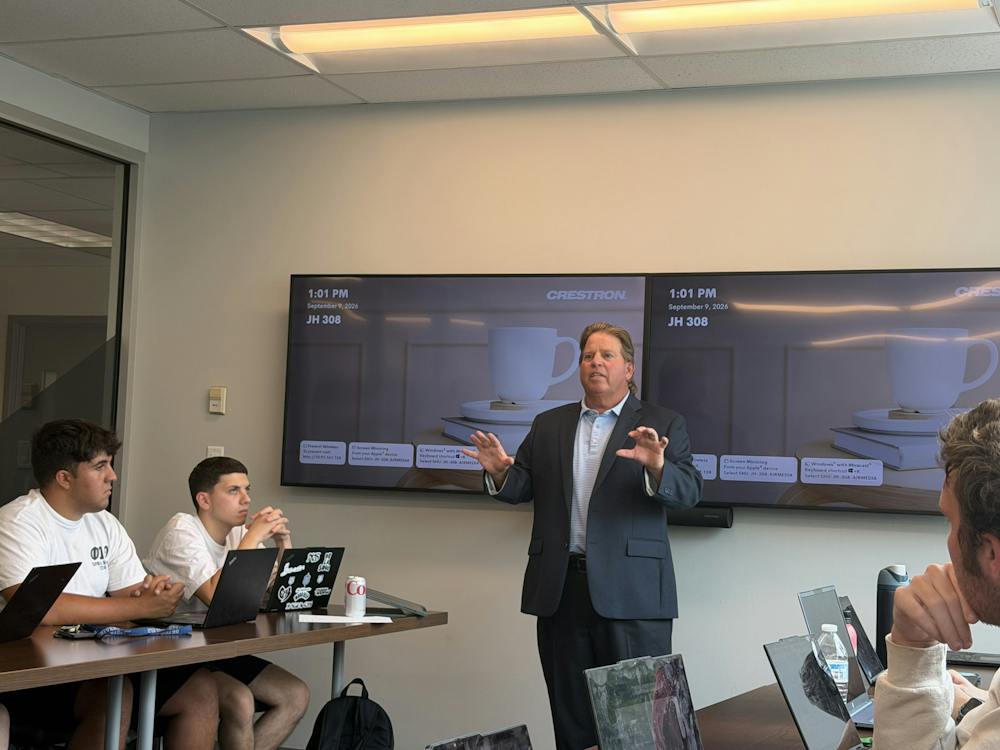
Nearly four decades of sports media experience came to Seton Hall on Wednesday as former ESPN executive Norby Williamson spoke with students during the first of several masterclasses planned for the fall semester.
Williamson joined Seton Hall’s College of Human Development, Culture, and Media as a Professional-in-Residence this fall. He shared his experiences in sports media and offered advice to students hoping to enter the field.
Williamson became executive senior vice president of studio and event production during his nearly 40-year career at ESPN. During his time there, he worked on many of ESPN’s programs before later leading production for FanDuel Sports Network.
Throughout the masterclass, Williamson emphasized the importance of knowing your audience and creating content that interests them.
“When we have success, we like to stay on that path,” Williamson said. “When we don’t, we look to get off.”
Williamson said ESPN initially struggled to find out what its audience wanted to see. The network experimented with different types of content, including Top 10 plays, NBA highlights and NHL highlights, while trying to bring different areas of sports coverage together.
As technology improved, Williamson said data and analytics gave ESPN a clearer picture of its viewers. The network could eventually analyze not only what people watched, but when they watched and how audiences responded to specific portions of a program.
Williamson pointed to ESPN’s “First Take” and Stephen A. Smith as an example. He said the show developed an extremely diverse audience, which aligned with ESPN’s goal of creating programming that could bring different groups of viewers together.
“You need to know who your customer base is,” Williamson said.
When students asked how to determine their audience, Williamson said focus groups, marketing research and analytics can help creators better understand who is viewing their content.
Knowing the audience also connects to another lesson Williamson talked about: building a brand. He said people entering the industry should understand what they want to accomplish and how they want the public to view themselves or their company.
Williamson spoke about the importance of making a strong first impression and remaining curious. He encouraged students to challenge the way things are normally done, pointing to how he challenged himself to improve his public speaking skills.
For students interested in journalism, Williamson offered advice on conducting interviews. He encouraged reporters to avoid questions that can be answered with a simple yes or no. Instead, he recommended entering interviews with an angle that can guide the conversation.
His message also focused on growing an audience. Williamson said the goal should be to increase the number of people viewing that content each day.
“The goal is to get more people to consume your content today than they did yesterday,” Williamson said.
When asked where sports media is heading next as fans continue to change how they consume content, Williamson said he honestly does not know. However, he pointed to the growing number of athletes creating their own podcasts and shows as an important development in sports media.
Rather than appearing as guests on sports shows or podcasts, athletes are now creating their own platforms and communicating directly with their audiences. Williamson said this gives athletes more control over their own narratives.
On an athlete’s own show, the player can decide which topics are discussed and how those topics are covered. Appearing on another media outlet can mean facing questions an athlete may not want to answer or that could affect their reputation.
Athletes having their own platforms creates a new challenge for traditional sports media because players now have more control over their stories and how they connect with fans.
Despite these changes, Williamson said one thing will remain the same as sports media continues to shift.
“The customer always wins,” Williamson said.
This event was the beginning of Williamson’s fall masterclass series at SHU. Future sessions will be held virtually, covering sports rights and streaming, the history of ESPN, the business of sports, social media and digital content, journalism versus opinion, managing change and building a career in an evolving sports media industry.
Jaden Highsmith is the head editor of The Setonian’s Sports section. He can be reached at jaden.highsmith@student.shu.edu.