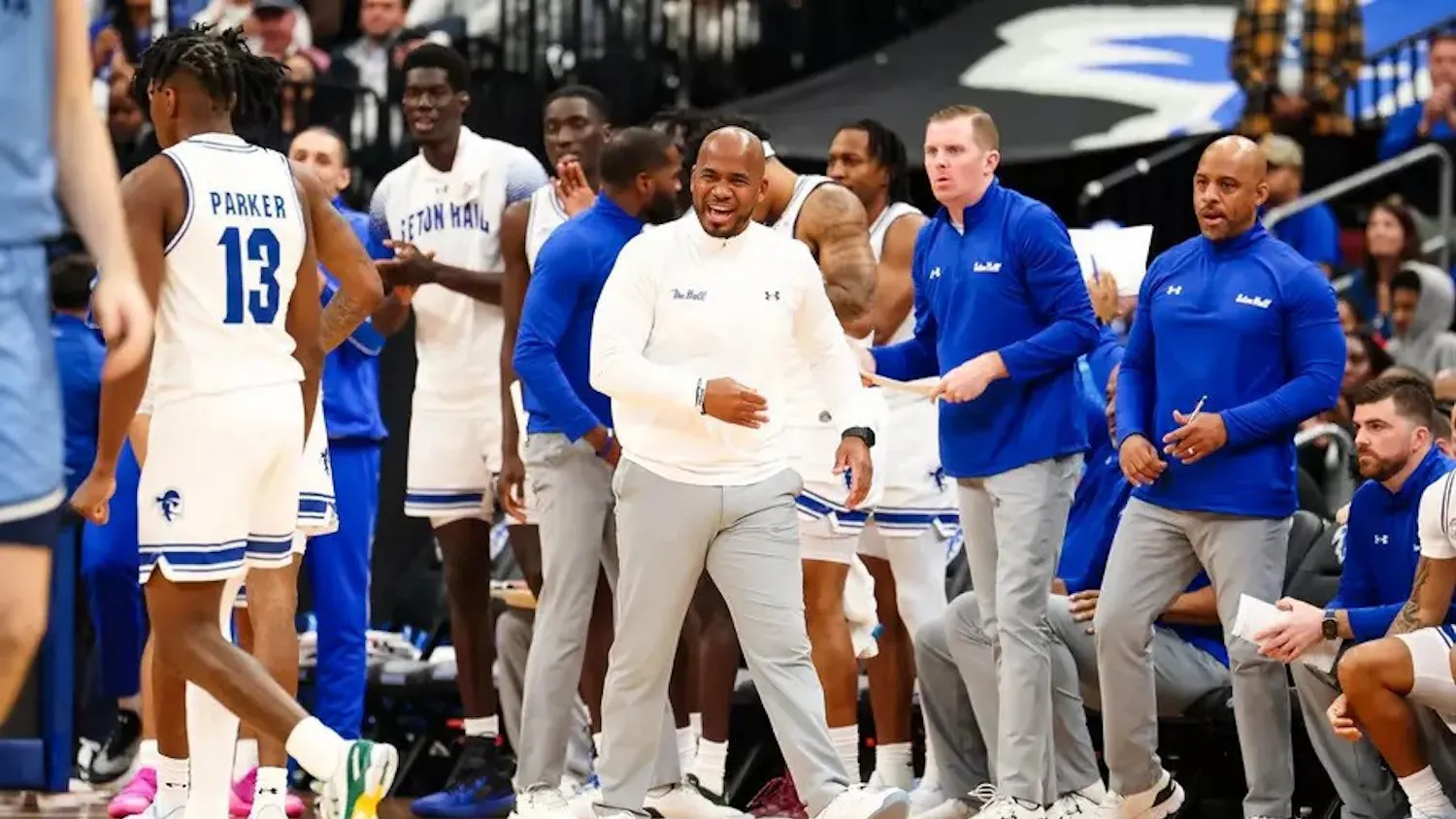
“My legacy is not defined by how I do at Seton Hall,” said University of Connecticut (UConn) head coach Dan Hurley to truTV sideline reporter Andy Katz after earning his first win in five seasons at the venue of his alma mater on Jan. 14, 2026.
Hurley’s comment felt fitting for the moment, but carries a much deeper significance in light of what the Jersey City native revealed about his playing days at SHU in SportsCenter’s latest “SC Featured” released Feb. 22.
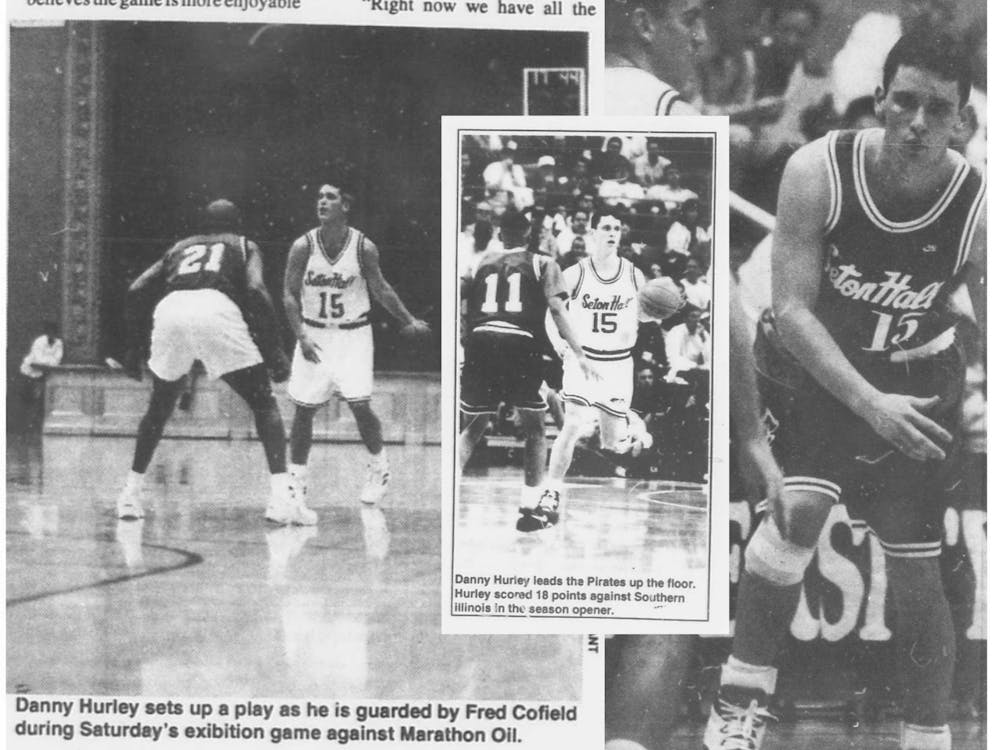
Nearly 30 years before he became a proven winner as a head coach, then-“Danny” Hurley felt like anything but that as a struggling young point guard for The Hall.
“I felt like a loser, I felt like a failure,” Hurley reflected. “My only identity was as a basketball player [and] I was going down in flames that way.”
After starting almost half of the Pirates’ games as a sophomore during the 1992-1993 season, and going “all in” the following summer, Hurley’s junior season got off to what he called a “brutal start.” In The Hall’s first two games of that season, Hurley had just seven total points on 2-for-17 (11.8%) shooting
“I’ve got basically ‘the yips,’” Hurley said. “If you’ve never experienced performance anxiety, like, you’re a shell of yourself.”
This performance anxiety took a toll on Hurley’s mental health, resulting in one of the darkest periods of his life.
“I was getting to the point where I was going to do harm to myself,” Hurley said. “To the point where I was going to isolate myself from the world, and just continue to drudge through my career and continue to spiral.”
“I just really went underground for a couple days, and just no one could find me,” Hurley continued. “I didn’t communicate with anybody for two, almost three days.”
Struggling on and off the court, after appearing in just those two games for the Pirates during the 1993-1994 season, Hurley decided to step away from the program and return home to Jersey City.
“The drive home the first time and really being in a dark place and, like, really questioning how much value you bring to the world,” Hurley said. “And how much of it is worth it for you to continue to go on, and you have no area of your life that is positive at this point.”
From there, Hurley spent some time away from the game before stepping in for his father, legendary St. Anthony High School head coach Bob Hurley Sr., as a coach-like figure for his alma mater.
“That was like chicken soup for my basketball soul,” Hurley said.
Feeling replenished by that experience, Hurley made his return to the court for SHU nearly nine months after leaving the program.
Over the next two seasons, Hurley started all but three games, while averaging 14.05 points and 5.25 assists per game during that span. He finished his career at The Hall as one of just 48 players in program history to score over 1000 points or more.
But Hurley’s experience at St. Anthony coaching in place of his father left a mark on him—he knew being a head coach was his true calling.
After graduating from SHU in 1996, Hurley spent a season as an assistant coach at St. Anthony, before being hired as an assistant coach at Rutgers University. Spending four seasons in Piscataway, Hurley returned to high school basketball to coach (and teach history) at St. Benedict’s Prep in Newark from 2001 to 2010, where he transformed the program into a national powerhouse .
Hurley then spent two seasons with Wagner University and six with Rhode Island before becoming the head coach of UConn in 2018. In the time since, he led the Huskies to five-straight NCAA Tournament appearances, a BIG EAST regular season and tournament title and, most importantly, two national championships in back-to-back years.
But for Hurley, winning means more than what his team and players accomplish on the court—it means helping them off it so they never have to experience the darkness he did during his playing days at The Hall.
“It goes well beyond just competing for national championships,” Hurley said. “I want to have a great impact on the lives of young people the way I needed when I was a college player.”
Zachary Mawby is the head editor of The Setonian’s Sports section. He can be reached at zachary.mawby@student.shu.edu.