
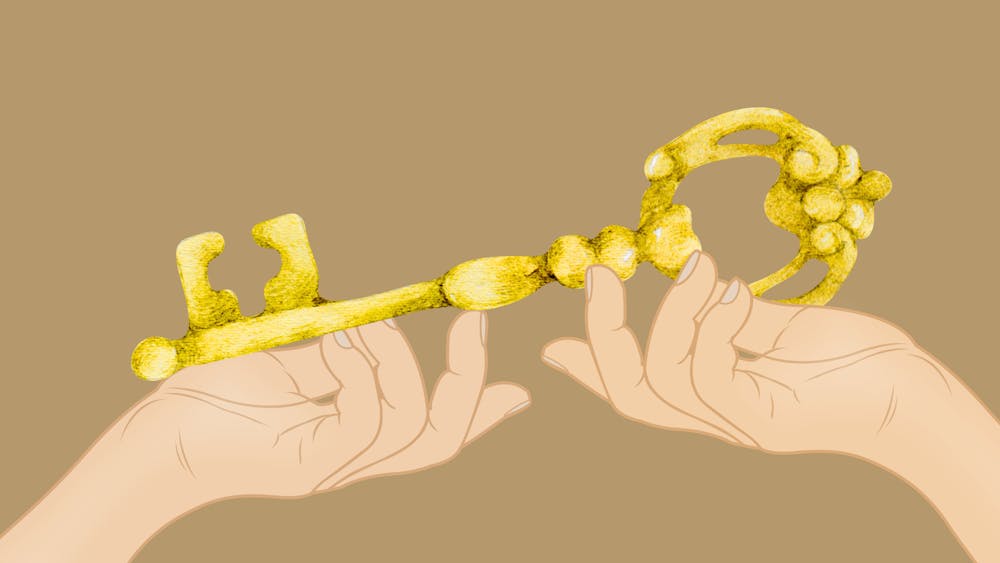
In elementary school, the phrase, “Treat others the way you want to be treated,” is instilled in young minds. This positive formulation encourages proactive kindness, service, and engagement. It’s also a universal concept in human thought.
In Matthew 7:12: "So in everything, do to others what you would have them do to you..."
In Hadith: "None of you [truly] believes until he wishes for his brother what he wishes for himself."
In Hillel the Elder: "What is hateful to you, do not do to your neighbor. This is the whole Torah; all the rest is commentary."
In Udana-Varga 5:18: "Hurt not others in ways that you yourself would find hurtful."
Even when we look to philosophy, Aristotle created the concept of the “Golden Mean,” the ethical principle that virtue lies in a balanced middle ground between two extremes: deficiency and excess.
The Golden Rule acts as a necessary “social glue” that prevents individualism from turning into total isolation; however, I’ve found that the Golden Rule doesn’t apply as strongly as it did before. People have stopped showing up for one another in the name of “protecting their peace.”
This influx of hyper-individualism should be addressed because inconveniencing yourself for others is not actually an inconvenience if they’re a friend. Everyone wants a village, but no one wants to be a villager because it takes too much time out of their own day and it costs money.
I interviewed my college roommates about their experiences with social boundaries. As sorority girls living in a house together, we’ve created a culture in our house that’s centered around helping each other out.
Whether it’s dishes, bringing in packages for one another, carpooling to buy groceries, taking each other to the airport, or simply being a person to talk to, we do our best to be “girls-girls.”
Not everyone gets to have the same experience of sisterhood, though. There are other friend groups I’m a part of where consideration isn’t guaranteed.
College students are undeniably busy, but the line between protecting your peace and being selfish has become extremely blurred. Time is the easiest thing a person can give to another and yet it is our most precious resource. There will always be time for the people you love.
Catherine Bagwell, PhD, a professor of psychology at Davidson College in North Carolina, said that, “In the face of life’s challenges, having a close friend to turn to seems to be a buffer or protective factor against some of the negative outcomes we might otherwise see.”
“Friendships protect us in part by changing the way we respond to stress,” Zara Abrams said in her article, “The Science of Friendship.” Blood pressure reactivity is lower when people talk to a supportive friend rather than a friend whom they feel ambivalent about. Participants who have a friend by their side while completing a tough task have less heart rate reactivity than those working alone. In one study, people even judged a hill to be less steep when they were accompanied by a friend,” Abrams writes.
Time spent together is not an inconvenience and is proven to increase happiness and life expectancy. “I’m busy” is one of the most disappointing texts to receive, but other factors contribute to this loneliness, too.
Another reason Gen Z has rebranded selfishness as self-care is because of affordability. When someone’s birthday is coming up, I immediately think about what I’m going to have to spend money on outside of a gift. Will it be brunch or dinner? Will it be in the city? Is the group splitting the birthday person’s meal, and do I need to buy a new outfit?
I can only imagine what it might be like for a college student with a different financial background than mine. When I can immediately predict that it’s going to cost me my next paycheck to celebrate a friend, I become hesitant. Everything is expensive, but there are also workarounds.
A handmade gift, a photo collage, or a workout class make for great gifts that can be planned and budgeted. As my parents like to say, “Proper prior planning prevents piss-poor performance.”
With proper attention, the Golden Rule, “Do unto others as you would have them do unto you,” still stands. The next time someone asks for a favor, to spend time together, or have a meal, consider what response you would expect from them.
Keira Bala is the videographer for The Setonian. She can be reached at keira.bala@student.shu.edu.


