Wanting to understand people is everything I’ve ever dreamed of. It’s what I’ve woken up for, studied for, and written for, for as long as I can remember.
As a kid, I wrote hundreds of short stories capturing my own thoughts, the thoughts of others, and people I had never met. Coming out of high school, I knew I had to study not just the expressions of our thoughts, but our individual “whys.” I became a psychology major, but writing stayed right at my hip. I picked up a minor in journalism, and leapt into The Setonian, a place where I could write about every person on campus and their story. Your “whys” became the focus of my college life.
I became a writer for the Campus Life section my freshman year, drawn to the ability to highlight the little stories—the smaller personal victories—that could go unnoticed. Even at a smaller university, anyone can feel lost in a big pond. The role, and my role as the Features Assistant Editor, gave me not just that individual honor, but the capacity to have more insight into student life than I thought possible. Coming to Seton Hall, I was sure that I would struggle to find people like me. In my experience interviewing the student body and faculty, I found, in the most comforting way possible, that there were far more people like me than I ever expected.
I can look back now and study my own methodology. I came to college with one mindset, I knew and one I had to experience to learn. The first was that I deserve to be everywhere on this campus. I wasn’t a biology major. So what? I’m going to explore McNulty. The fifth floor of Jubilee has just staff offices. Ok? I’m going to wander and read my favorite professor's article stamped outside their door. I noticed quickly that people are very afraid to be where they “don’t belong.” When you're in college, you belong anywhere you want to belong. Especially since you’re paying for all of it. So, go to the networking event for a major that’s not your own. Go to the practice rooms in Corrigan, or the TV studio in Fahy, or the Arts building lobby just for fun. It doesn’t have to be what you do forever—take the space to use for trial and error and enjoy it.
The second is that if you come to college, you will find people like you. But when you join a club or organization, that is where you will find your people. Your interest outside of academics is oftentimes where you’ll find the people who share your “whys.” I joined the SHU Theatre Council and The Setonian because theatre and writing were things that I did. By the end, it is far more about the people than any show or story I’ve produced in these organizations. They are the people who have given me the strength to persist in my classes and be bold enough to take risks towards my career post-grad. You might find a person to make small talk with in your courses, and that is, of course, helpful; it might even bloom into a friendship as powerful as one in a club. However, I can personally say that the experiences of getting to know the people in your club are far richer and ultimately make your complete college experience brighter.
Be everywhere, be anywhere, and do it all for your “why.”
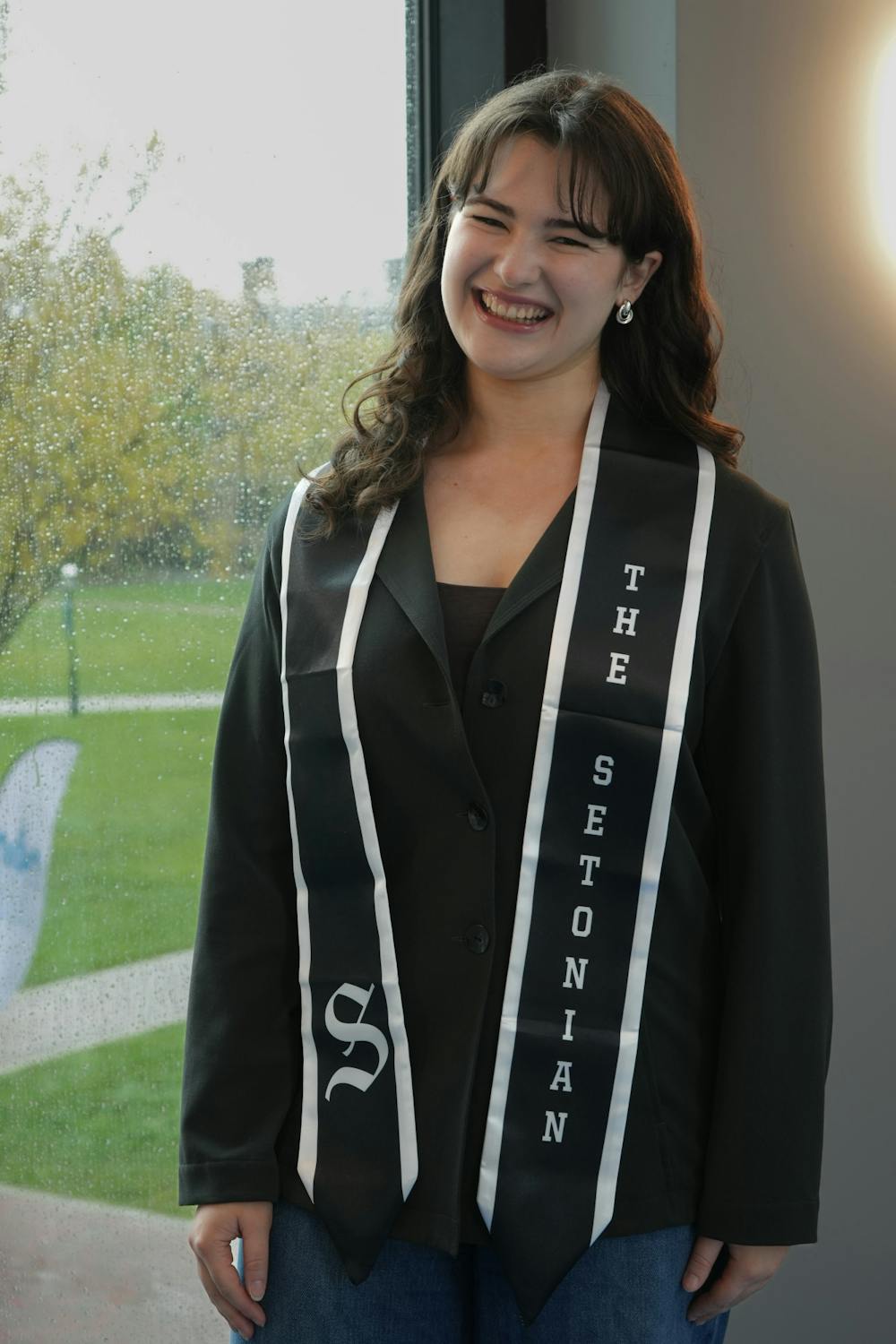
Rhyleigh Russell is the assistant editor of The Setonian’s Features section. She can be reached at rhyleigh.russell@student.shu.edu.