
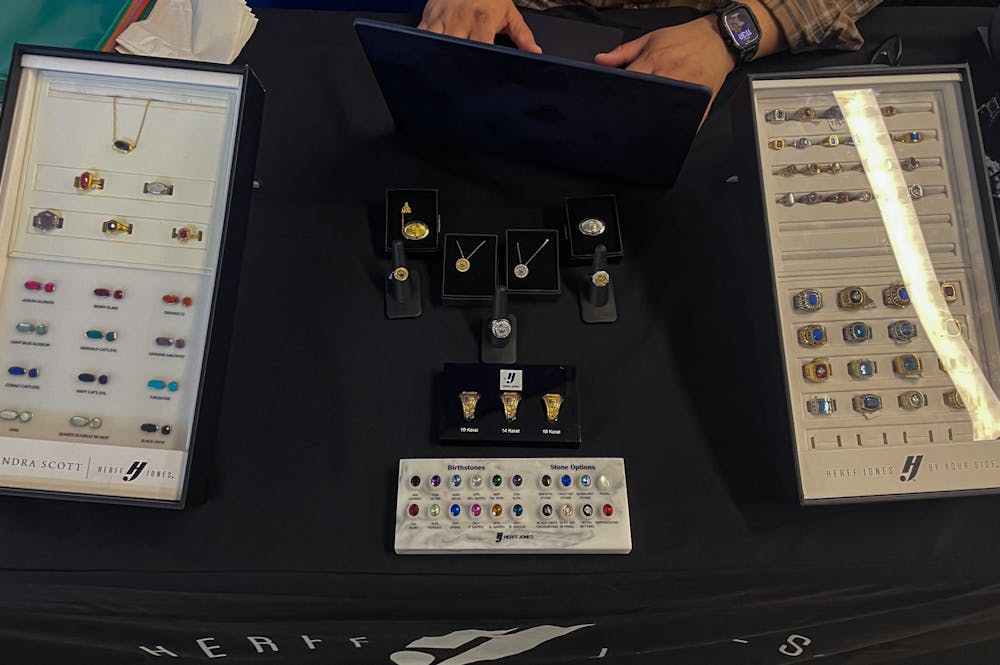
When it comes to a graduating class, whether in high school or in college, traditions tend to be valued and respected through generations. Students may remember in their high school senior days, taking part in senior skip days, senior sunrise, and the friendship-breaking, drama-inducing senior assassin. However, one of the oldest and most widely known traditions is that of class rings.
The tradition of class rings dates back to 1835. Nearly two centuries ago, students at the United States Military Academy at West Point were the first to wear class rings to visually display their unity.
Fast forward to now, the trend has spread nationwide, with rings being offered by companies such as Jostens, Balfour, and Seton Hall University partner Herff Jones.
Alan Martinez, a senior sports management major, said that while he has not purchased a college senior class ring, he did buy one in high school. Though he brought up an interesting issue: it wasn’t something he wanted.
“It wasn’t really my idea; it was more my father’s idea,” Martinez said. “He really was like ‘Oh, tradition’ and, you know, ‘Have a little bit of memorabilia from your time in high school’.”
This idea plays a part in a larger debate. With each passing generation, are we seeing the decline of senior jewelry?
Max Germain, a senior nursing major, sides with the decline.
“I do think it’s becoming less popular,” Germain said. “I don’t hear any of my friends talking about it, whereas my dad and all his friends, they all got their class rings.”
Companies are noticing the same trend.
In a 2018 article from Fashionista, Jostens’ Chief Marketing Officer Ann Carr said there's “not as many class rings that are sold today as there were 30 years ago,” emphasizing the generational divide on class rings.
So why are current seniors purchasing less jewelry? Students' reasoning boils down to two main complaints.
For some, like Martinez, it’s the price.
“Us students, we may not have the money to buy such a pricey ring,” Martinez said. “It is a really nice ring, but at the end of the day, do you really want to pay that much for a school ring?”
Others agree, like Felix Torres, a senior finance and marketing major, who said he would be more inclined to purchase senior jewelry if it were less expensive.
The cheapest offering from Seton Hall is the solstice pendant, which starts at $439. The most expensive is the Spectra 18K white gold ring, which will set students back around $3 thousand.
For other seniors, the criticism lies in the ring’s appearance, as it did with Akpene Badasea, a senior marketing major.
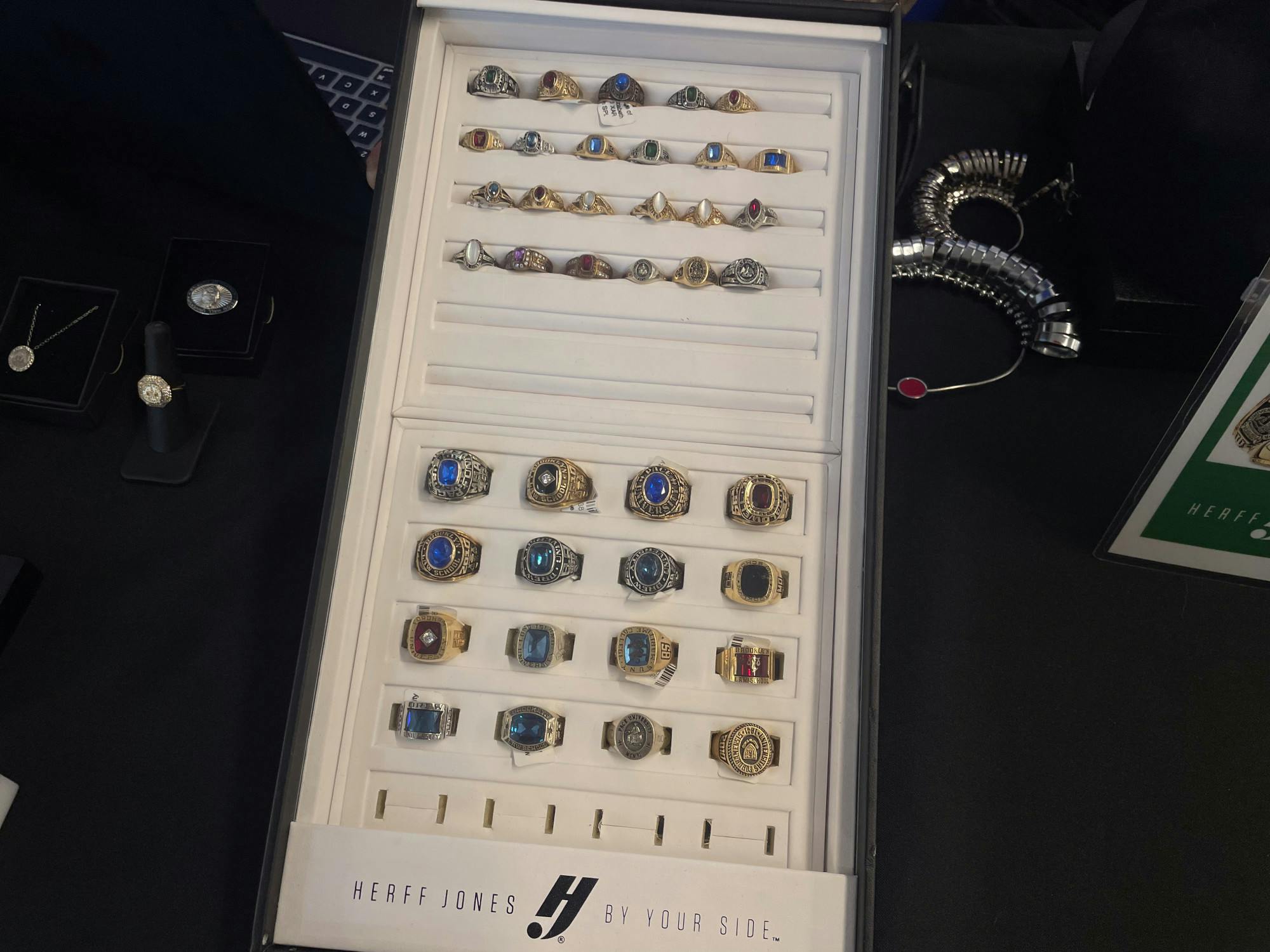
“I was looking at the class rings, but I don’t like the design,” Badasea said. “They’re too plain…I see a lot of older generations have the same exact one; there’s no change to them.”
Due to these criticisms, many students are favoring their own ways to commemorate their time at SHU. Badasea said that she has been keeping a photo album of her time at SHU, while Martinez said that he feels like “our generation’s tradition is photos and videos from our time here—that’s just priceless memories.”
Even underclassmen have their own opinions about buying senior jewelry. Thomas Corrales, a freshman psychology major, said he likely will not buy senior jewelry mainly because he already has his fair share of jewelry he wears. In contrast, Briana Chaperon, a junior biology major, thinks a class ring makes for the perfect heirloom.
Despite the criticisms and conflict, though, senior jewelry definitely has its audience.
“I just like jewelry, so I would,” Badasea said. “I am on a sports team, and I feel like it would be cute to wear to a game or for alumni day.”
Germain also understands the appeal of senior jewelry.
“It represents the years of hard work [students] just put in to get their degree, and all the stuff they learned,” Germain said. “My parents told me that I should look into it and get one.”
So yes, while senior jewelry and class rings seem to be experiencing decline, the tradition is not dead. If people want a ring, they’ll buy one. It’s as simple as that. If you’re one of those people, check the University Center for tablings or order them online.
Matthew Koroski is a writer for The Setonian’s Features section. He can be reached at matthew.koroski@student.shu.edu.


