For the Dementia Art Therapy Alliance (DATA), the goal isn’t to create a perfect painting; It is to create a moment of connection.
Founded by Annapurna Saha, a junior cognitive and behavioral neuroscience major, DATA brings Seton Hall students together with individuals with dementia through art projects designed to encourage creativity, conversation and companionship.
“I really wanted to create something that combined service with genuine, one-on-one human connection,” Saha said.
Club members work with simple tools like crayons, paper and markers to make creative projects and drawings.
“Going forward, I’d love for us to keep expanding what we do and incorporate seasonal crafts, painting, collages and other projects based on what the residents actually enjoy,” Saha said.
But the art itself is only part of the experience.
“Sometimes the art is really just the starting point for a conversation,” Saha said.
Conversations can range from the artwork participants are creating to favorite music, hobbies and other interests.
“Just introduce yourself, be patient, talk to the person the way you would want someone to talk to you and let the interaction develop from there,” Saha said.
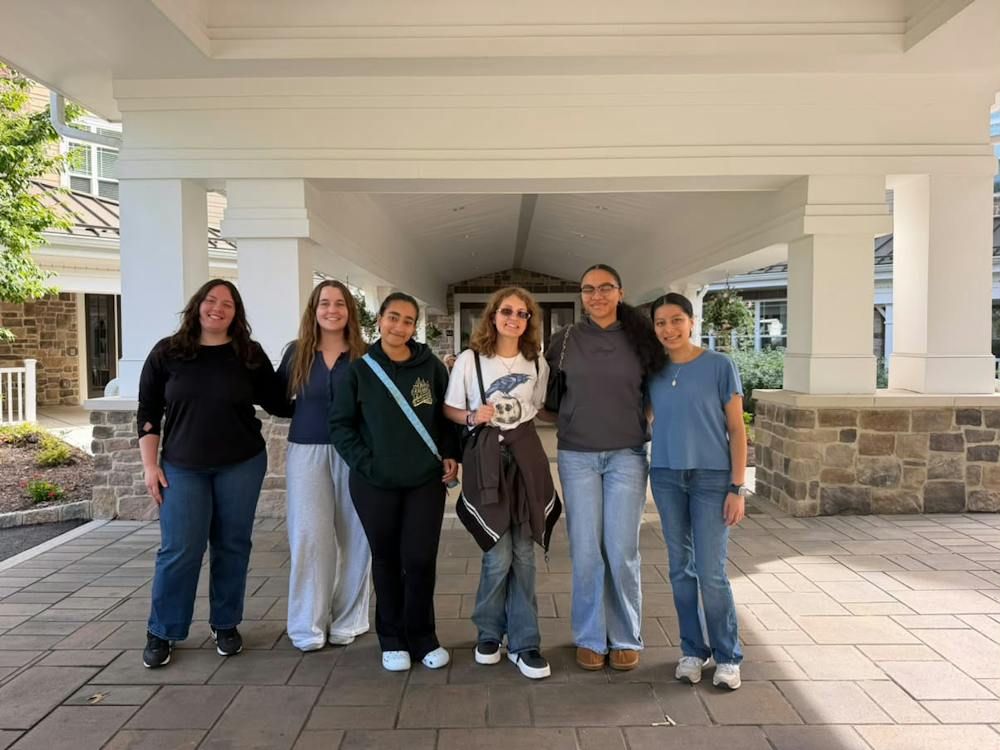
The club held its first event on Sept. 19, when members traveled to Sunrise of Livingston Senior Living to paint with seniors. Volunteers created art alongside residents, building connections and helping them feel seen.
The experience taught Saha that, no matter how much planning goes into an activity, the most impactful encounters often happen naturally.
DATA member Mariana Branco, a senior biology major, said that flexibility is especially important because each individual has different needs and comfort levels.
“That is why being flexible is necessary, considering the different energy levels of the seniors, their varying attention spans and willingness to participate and varying cognitive needs,” Branco said.
Some seniors are more likely to participate in a project immediately, while others need more time to adapt and become comfortable.
For Branco, those differences reinforce the importance of treating people with dementia with the same respect afforded to anyone else.
Branco hopes that “ people understand that people living with dementia are always worthy of being treated [with] respect, regardless of how their brain might change over time.”
“Someone living with dementia still has emotions, preferences, humor, stories, creativity and a need for connection just like anyone else,” Saha added.
DATA uses art as a way for volunteers and individuals with dementia to communicate, allowing participants to engage in ways that feel right for them. Executive board member Bhavya Aluri, a freshman biochemistry major in the BS/MD program, said she’s seen firsthand how important this can be.
“I have seen how art helps people with neurological conditions express themselves and brings them joy through my personal experience,” Aluri said. “I like how DATA aims to use art as an avenue to allow people with dementia lessen the symptoms of dementia, interact with others, and better their lives as a whole.”
Katherine Faist, a freshman studying international relations and member of DATA, thinks the club is beneficial to the SHU community “due to its emphasis on service and caring for others, especially the vulnerable.”
“I hope DATA grows and more people realize the importance of not only providing physical care to those with dementia but also mental care,” Faist said.
The club’s faculty sponsor, Dr. Paige Fisher, an associate professor in the psychology department, said opportunities for interaction can be particularly important for individuals with dementia, who may experience loneliness.
“We know that loneliness and isolation are serious problems for elderly individuals or those with cognitive impairment, even when they live with/near others,” Fisher said. “DATA provides opportunities for stimulation and interaction that are important to quality of living.”
Ultimately, DATA hopes individuals with dementia leave each session feeling cared for, seen and treated with dignity and respect.
Looking ahead, Fisher hopes the club will become an official campus organization at SHU.
“I know their student leaders are very passionate and organized, so I have a lot of confidence they will be able to move the club forward both at Seton Hall and in the greater South Orange and nearby community,” Fisher said.
Lucia Matarazzo is a writer for The Setonian’s Features section. She can be reached at lucia.matarazzo@student.shu.edu.