
The Senate passed the Protect College Sports Act by a 77-22 vote on Sept. 28. With the bill now headed to the House of Representatives, BIG EAST basketball coaches weighed in on its potential impact on the future of college basketball at media day Thursday.
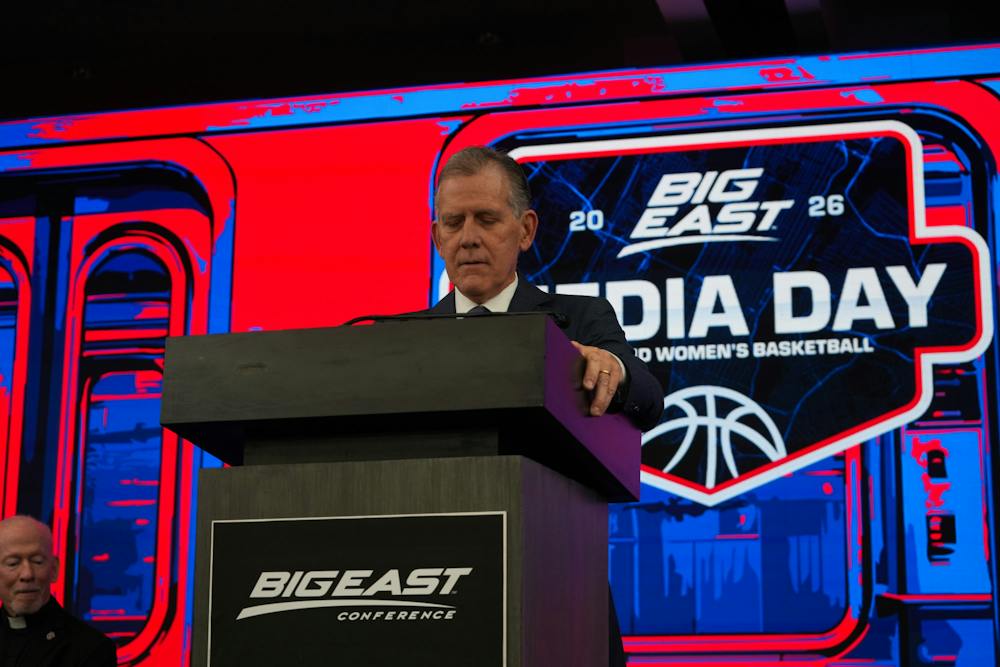
Minutes into his opening remarks, newly appointed BIG EAST commissioner Tim Brosnan made his intentions clear regarding the future of the conference.
“Tradition is not a business. Times change, and successful businesses recognize that. So today, we offer a full-throated endorsement to the passage of the Protect College Sports Act,” Brosnan said.
Brosnan is one of four conference commissioners to support the bill, alongside James Phillips of the ACC, Tim Pernetti of the American and Brett Yormark of the Big 12.
Co-authored by Republican Senator Ted Cruz and Democratic Senator Maria Cantwell, the bipartisan bill proposes major changes to the structure of collegiate athletics, ranging from transfer limits and NIL restructuring to protections for Olympic sports, among other provisions.
Many coaches see transfer limits as a strength of the bill. The proposed bill would limit athletes to one “free” move over five years without sitting out a year.
College athletes currently face no restrictions on how many times they can transfer, which can create high roster turnover.
Many coaches believe placing limits on transfers would make it easier to build programs with greater stability from season to season.
“Obviously, the portal's still going to be there,” Butler women's Head Coach Maria Marchesano said. “You're still going to lose kids here and there, but I think it'll be more sustainable to build rosters and plan accordingly and hopefully get some carryover and build chemistry.”
“We have to do something in college sports to slow down this locomotive that's coming at us eight million miles an hour,” Georgetown men’s Head Coach Ed Cooley added. “As long as there's something on the table that we can work with, it'll allow us an opportunity to try to build a program that sustains continuity, chemistry, and culture.”
The proposed restrictions could also have an impact beyond the basketball court. With athletes changing schools more frequently, some coaches have raised concerns about the effect transfers can have on degree completion and career preparation.
“We're an educational institution and we want people to get degrees,” Creighton women’s Head Coach Jim Flanery said. “When they send that first resume with five schools or six schools on their resume, they're not getting the job that somebody else is getting who got through in four years at one or two institutions.”
At the same time, the bill recognizes that not every transfer is made under the same circumstances. Proposed exceptions would allow an athlete to transfer a second time without sitting out a year if they are pursuing a graduate degree, have experienced sexual harassment or assault, their sport is cut or their coach leaves the program.
Coaching can be a deciding factor for college athletes, particularly as they develop their careers.
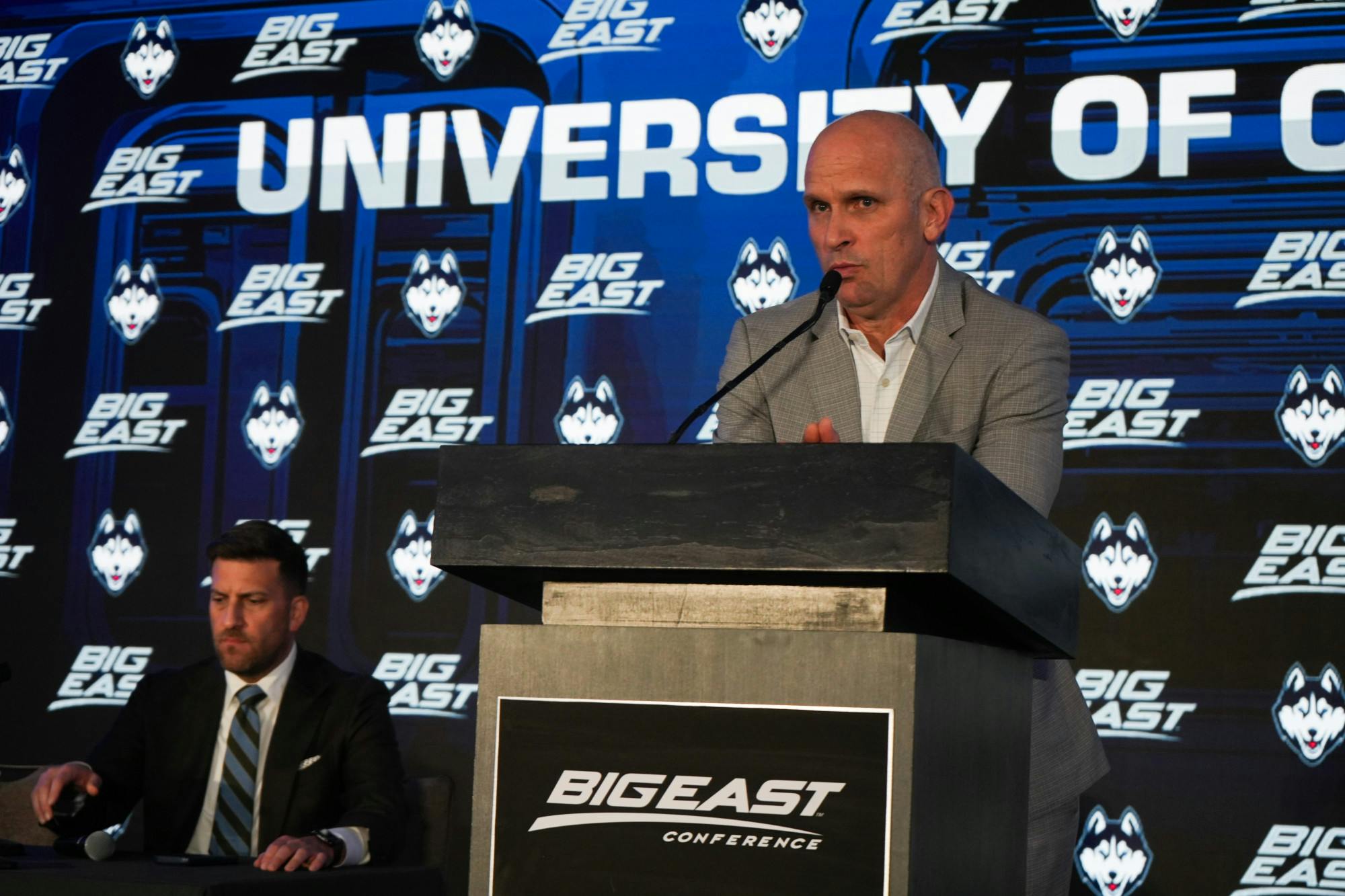
One supporter of the provision is UConn men’s Head Coach Dan Hurley. The Huskies have been active in the transfer portal, and Hurley said transferring can play an important role in an athlete’s development.
While Hurley does not support unlimited transfers, he believes athletes should be allowed one transfer without penalty. He also sees circumstances where a second transfer may be warranted, citing the career of 2026 NBA first-round pick Tarris Reed Jr. as an example.
Reed played his first two years of college basketball at the University of Michigan before transferring to UConn following the dismissal of former Head Coach Juwan Howard. Last season Reed was named first-team All-Big East and Most Outstanding Player of the East Region during the NCAA tournament.
“Obviously Tarris Reed's time on campus was of great benefit to the University of Connecticut…but UConn brought a lot of value to his career and life,” Hurley said.
The bill also offers major changes for the future of NIL. Some of the changes include making NIL a federal right by removing the inconsistencies among state laws, requiring deals above $600 to be reported and capping agent fees at 5%.
But a concern for programs is how much money is needed to build a championship team.
“I look at it like it's a poker game,” Hurley said. “There's a certain amount that you probably need to have to get in the game. Is that number 14 million? Is that number 18 million to get to a Final Four? I don't know.”
In response to claims that national championships are becoming pay-to-play, the bill would set an NIL cap for schools. However, the bill would actually raise the current cap from $21.5 million per school to $48.8 million. That aforementioned $48.8 million would include both money spent by schools, and individual athletes third-party NIL deals.Additionally, schools generating $80 million or more from revenue-generating sports would be required to keep the same number of roster spots and grants-in-aid for non-revenue sports as they had in the 2024-25 academic year under the last House settlement.
No date is set for the House’s vote on the bill, but it will most likely come after the Nov. 3rd midterm elections. Despite the bill receiving overwhelming bipartisan support in the Senate, some fear that the bill’s fate could be determined by which party controls the majority in the House.
“I'll adjust and adapt to anything,” St. John's men's Head Coach Rick Pitino said. “But understand something—if the Democrats win the midterm elections, it'll be difficult to pass.”
Many Democrats have faced pressure from civil rights and labor groups to block the bill under claims that it disproportionately impacts student-athletes of color. Most notably, Democratic Sen. Cory Booker called it “a bill that’s going to hurt so many.”
In addition, many critics claim that because of the amount of provisions the bill has, it would give the government power never seen before over an athletic association. While leagues like the NFL allocate TV rights under government control, the bill would essentially give Washington control over the workings of collegiate athletics.. The bill has 38 numbered sections addressing everything from transfer and NIL reforms to broadcasting rights, HBCU programs, foreign finance, employment status and more.
“I think the act is too fat right now,” Marquette men’s Head Coach Shaka Smart said. “In other words, there's too much in it. It needs to be slimmed down.”
Despite the political drama, what this bill could do for college athletics is something that hasn’t been accomplished since the birth of NIL: give every school and athlete the same rules to abide by. In the changing landscape of college sports, commonality may be what we’ve needed.
“I think it's great, no matter what people agree or disagree with it,” Seton Hall women’s Head Coach Anthony Bozzella said. “It's great because we're all going to follow the same rules. So I do hope the House passes it because we need some rules that are equal.”
William Gilhooly is an assistant editor of The Setonian’s Sports section. He can be reached at william.gilhooly@student.shu.edu.


