
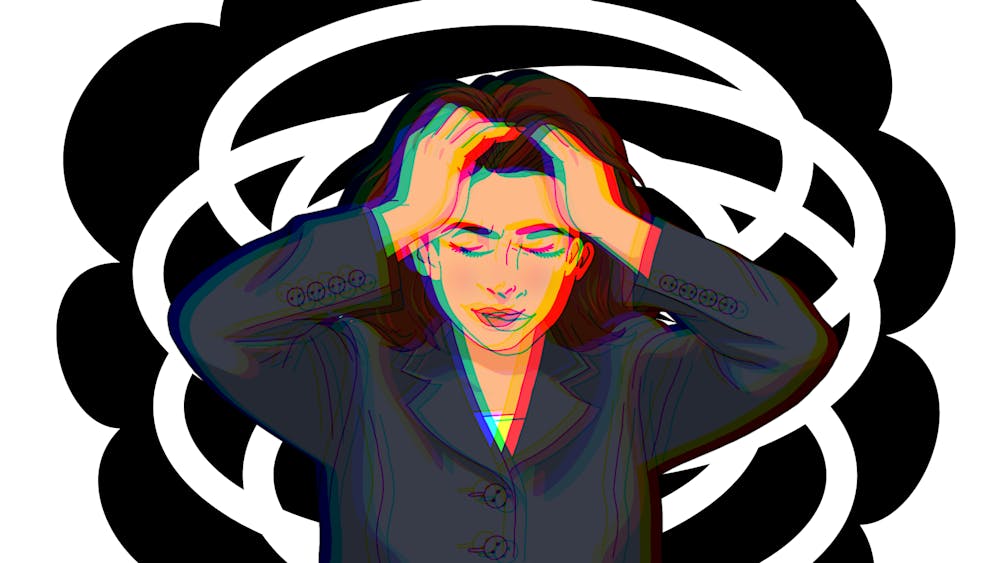
I bet if you take some time to scroll through Instagram or TikTok long enough, you’ll eventually find an influencer joking they’re “so OCD” just because they like to keep their space tidy and clean.
But that isn’t truly representative of obsessive-compulsive disorder (OCD)—it isn’t about being neat and organized. It’s about trying to seek absolutes and surviving distressing, repetitive thoughts.
When influencers and celebrities make flippant jokes, OCD becomes trivialized. It’s been reduced to a silly quirk over a serious, debilitating mental health disorder.
The reality of OCD looks different from the stereotypes we see on social media.
Social media has truly fueled a fire when it comes to OCD. It feels like everyone is suddenly self-diagnosing over what feels like a personality quirk so minuscule compared to what OCD actually is.
“Everything in my closet has to be organized by color…I’m so OCD” is something an influencer has probably said, or something like, “I am so OCD because I have to separate class papers into different folders.”
But this is where OCD is truly misunderstood—people with OCD do not enjoy their thoughts or compulsions, like many on social media make out their organization to be. Many people don’t take the time to understand what it is, how it manifests, and how it impacts those who suffer every single day.
OCD features a “pattern of unwanted thoughts and fears,” known as obsessions. Obsessions may lead to “repetitive behaviors” or compulsions. They “get in the way of daily activities and cause a lot of distress,” according to Mayo Clinic. Symptoms typically begin between the ages of seven and 12, or late teens and early adulthood (around 20 years old) and about one in 40 adults have OCD or will develop it at some point in their life, according to the International OCD Foundation.
Specific thoughts give OCD sufferers intense anxiety, and to relieve it, they have to carry out compulsions (most of the time multiple times) just to feel an ounce of relief. Once the relief hits, it doesn’t last for long as the OCD thought returns quickly, leading sufferers into a loop of “what ifs” that feel like they can only be satisfied by compulsions/rituals, according to the International OCD Foundation.
Acting on compulsions allows OCD thoughts to reoccur and “stick” in one's mind, meaning it’s hard to dismiss/easily move on from the thought. When it’s hard to let go, many turn to exposure with response prevention (ERP) therapy and selective serotonin reuptake inhibitors (SSRIs) for recovery.
OCD is NOT enjoyable as influencers make it seem—it causes extreme distress for the sufferer. Just because someone exhibits “compulsive” behaviors (meaning something you prefer or like, according to the International OCD Foundation) through organization and neatness rituals, it doesn’t mean they have OCD. A lot of people get this wrong, making OCD a misunderstood joke.
Celebrities throw around the term “OCD” in defining some of their odd habits too often when they don’t know what it’s like to experience intense anxiety, intrusive thoughts, and unbreakable loops of compulsions. OCD is a severely debilitating condition, and it “is considered one of the top ten most disabling illnesses,” according to Ground Work Counseling. It should be treated as such.
These constant jokes or unserious remarks made around OCD make it harder for people to know what OCD really is, meaning they’re less likely to seek help even when they’re suffering. People who are already in treatment feel even more alone because it seems like people won’t ever understand how they feel, according to NOCD.
When it’s misunderstood, strugglers like myself feel unseen and unheard.
I was diagnosed at four years old. Symptoms rose in preschool, when I was triggered by the thought of dirt, germs, choking and dying. My mind would go round and round on these things that scared me, and to calm myself, I sought reassurance and repetitive behaviors.
I struggled from then on, but it was manageable. When the pandemic hit, it opened a whole new can of worms for my OCD. I eventually started taking medication. After a few years of it, I was in recovery and stopped it after feeling better. Whenever I had flare-ups, I turned to weight lifting and incline walking, which always seemed to help, but it’s not and has never been a perfect solution for such a draining disorder.
At 22, I still face challenges. OCD felt manageable most of college, up until this past January, when I moved out of my dorm back into my house with my parents. I also began an internship in New York City, where I work three days a week. On top of that, I’m also taking a full course schedule in the last semester of my senior year at Seton Hall, while juggling the role of editor-in-chief of The Setonian.
These new, wonderful things in my life were quite triggering for OCD, and provided a sense of instability and being out of control, which OCD thrives off of. I always have to remind myself that I’ve got this, my fears are NOT facts, and that just because I thought it doesn’t make it true.
For fellow strugglers like me, inaccurate depictions in movies, television, and social media lead people to think it’s “cute” and “quirky” to possess traits of being clean and organized. Reality is, this is not cute or accurate, and it shouldn’t be normalized.
Although some believe it is normal and justifiable to find humor in mental illnesses as it “can strengthen the feeling of acceptance, enhancing empathy and a sense of belonging,” according to the National Library of Medicine, humor and jokes create a stigma and “misleading representations,” causing people to have “negative attitudes” to mental disorders and treatment, according to the American Psychiatric Association.
Constant jokes and unserious remarks continually contribute to OCD’s misunderstanding. It may seem harmless and in good humor, but these things carry real consequences, distorting your perception and making diagnosed sufferers feel unseen and unheard.
It’s not a quirky, silly personality trait. It’s not a buzzword just to get views on Instagram or TikTok. It is a serious mental health disorder that affects millions of people a year. That should be understood and taken seriously.
Students who feel they may exhibit signs and symptoms of OCD can reach out to SHU resources for support. Counseling and Psychological Services (CAPS) can be reached at 973-761-9500. For a psychological emergency, call CAPS’s 24-hour emergency number at 973-275-HELP (4375). Students also have access to Uwill, an online teletherapy resource.
Dominique Mercadante is the Editor-in-Chief of The Setonian. She can be reached at dominique.mercadante@student.shu.edu.


