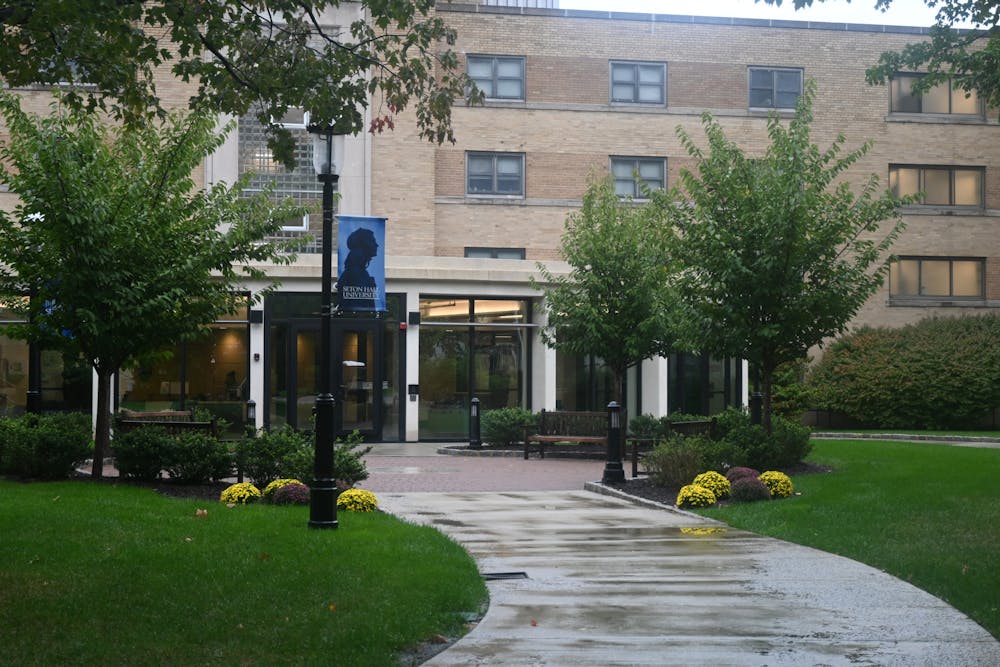
After a week of temperatures in the high 80s, several dorm buildings have experienced extreme heat, particularly freshman residence halls Aquinas Hall and Boland Hall, where the building-controlled heating and cooling systems limit students’ ability to adjust temperatures.
The issue stems from seasonal limitations because Seton Hall can not switch its residence halls to air conditioning due to state regulations and fluctuating spring temperatures.
In an email to The Setonian, University Relations said SHU’s Facilities Engineering and Residence Life teams monitor heating and cooling conditions in the residence halls closely, “particularly during seasonal transitions.”
“New Jersey state regulations require the University to maintain heating capacity until weather conditions are sufficiently and consistently warm to support a full changeover to air conditioning,” University Relations wrote.
Due to overnight lows in the 30s forecasted in upcoming days, switching to cooling would limit the University’s ability to restore heat to code-required levels if needed.
The policy aligns with the New Jersey State Housing Code, which governs the University’s heating obligations during the cold weather months.
“Our decisions reflect that framework alongside the operational realities of our systems,” University Relations said in an email to The Setonian.
University Relations also explained that some residence hall systems require “a full seasonal changeover from heating to cooling that cannot be quickly reversed.”
On Wednesday, Residence Life addressed student concerns in a campuswide message.
“We understand that the recent unseasonably hot temperatures have created discomfort in some of our residence halls. We want to assure you that the University cares about your well-being,” the email said. “As part of the seasonal transition process, residence hall heating and cooling systems cannot transition to air conditioning until there is confidence that warmer temperatures will remain consistent.”
The email also included a few tips to help students stay cool. These included keeping blinds closed, utilizing additional fans and staying hydrated.
Experts recommend additional measures, including taking short, cool showers and spending time in cooler spaces to limit exposure to the heat.
Some students have taken to Fizz, a social media app used by students, to express their frustration and call for the air conditioning to be turned on. Posts on the platform have also circulated unverified claims of a student experiencing heat-related illness. The university has not confirmed any such incidents.
The New Jersey State Housing Code requires that rooms do not exceed 82 degrees in warm weather conditions. University Relations told The Setonian that Facilities Engineering is reviewing all reported instances of temperatures above that threshold.
Students with questions or concerns are encouraged to contact their resident assistant.
This story has been updated to include the New Jersey State Housing Code's requirement that rooms do not exceed 82 degrees in warm weather conditions. It has also been updated to include that residence halls require a full seasonal changeover that cannot be easily reversed. The regulation that requires the university to maintain heating capacity until weather conditions are consistently warm has also been added.
Kaelyn Blizard is the assistant editor of The Setonian’s News section. She can be reached at kaelyn.blizard@student.shu.edu.