
Vote for this couple. Vote for this team. Vote for this duo.
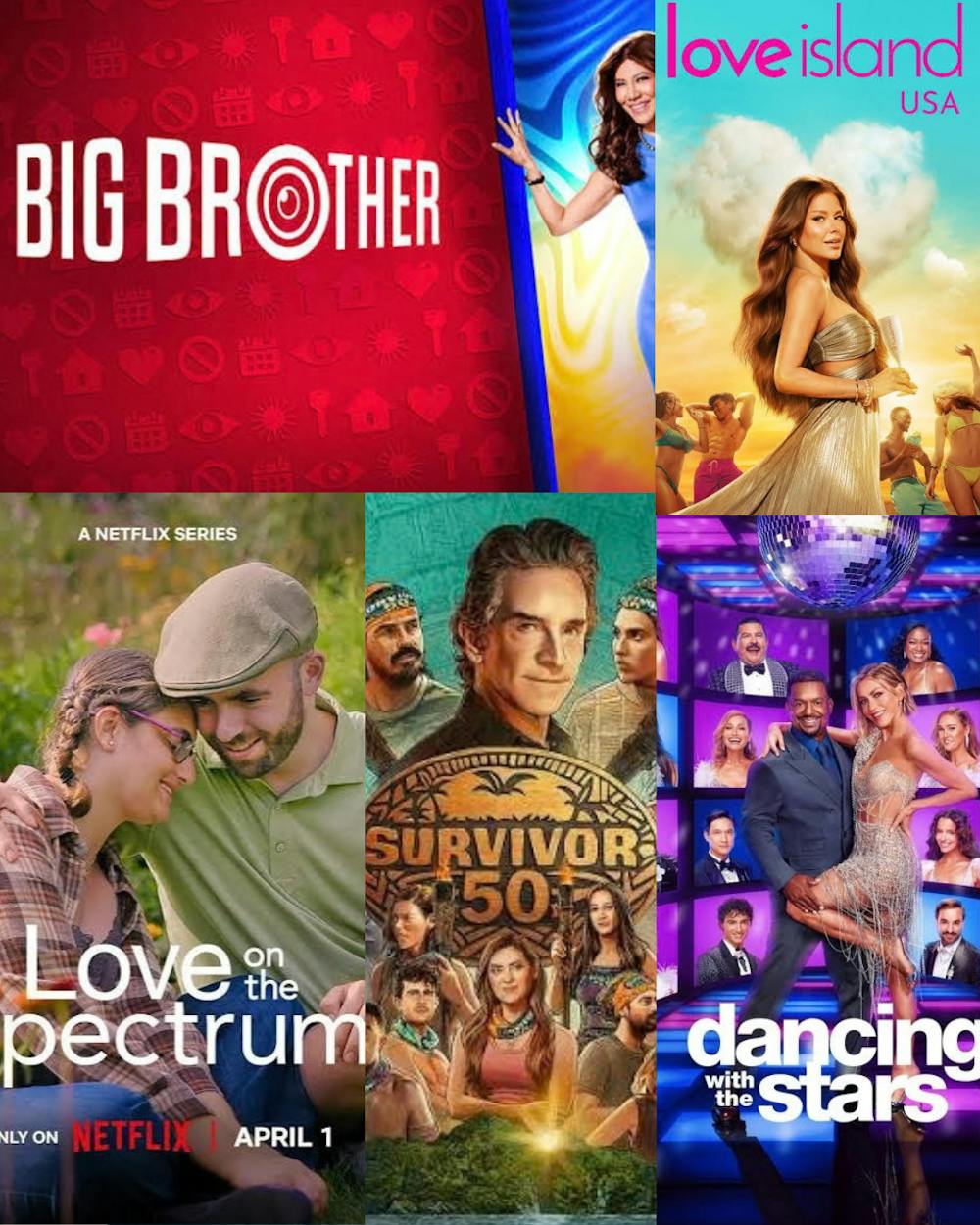
These are the kinds of messages that often flood social media when reality television shows such as “Love Island USA” and “Dancing with the Stars,” are at their peaks.
For many Seton Hall students, reality TV is more than something to watch. It has become a shared experience, sparking conversation among students both on and off social media.
John Kraszewski, a visual and sound media professor who teaches a class on reality television, has noticed the genre’s continued popularity among students.
Reflecting on the two decades Kraszewski has taught about reality TV, he noted that students today “love it as much as the students did 20 years ago.”
“There’s such an intense commitment and passion for the genre,” Kraszewski said. “It’s so much fun to teach because the people in the class are mostly super fans or…by the time they're done with the class, they really like reality television.”
For many students, that passion comes from the community surrounding reality TV. Watching a show can become a shared interest, something to discuss with friends in person or debate with strangers online.
Dylan Reynolds, a junior finance and wealth management major, enjoys both sides of that experience.
“On TikTok and other social media, it’s fun seeing everyone’s opinions, but also, my friends personally, they all have opinions, and it’s nice to talk about,” Reynolds said.
Social media has also changed the way audiences interact with reality TV. Viewers can vote, comment and follow conversations about the show in real time.
Kraszewski pointed to “Love Island” as an example.
“Not only is there the opportunity to discuss it on social media, but even the “Love Island [USA]" app is a social experience of explaining where you can…vote to see who stays and who goes, so there's that element of it,” Kraszewski said.
According to Kraszewski, algorithms can also introduce viewers to shows they may enjoy, but wouldn’t have otherwise watched.
“There's also the element of stuff showing up in your TikTok feed [where] you might not be watching the show, but the algorithms are figuring out that you might be an ideal person for the show,” he said.
Watch parties are another way reality TV becomes a social activity.
For Eleny Torres, a sophomore business student in the 5-year B.S/M.B.A program, watching with friends makes the experience more enjoyable.
“It's a bonding moment where we all come together, and we're relating on watching the same thing,” Torres said.
During “Love Island,” these watch parties became heated, according to Torres.
“With ‘Love Island,’ we had to pause and rewind when there were crazy things going on,” Torres said. “Everyone’s screaming about what going on and it’s like ‘Wait no, we have to go back; I didn’t hear what he said.’”
For those who don’t watch reality TV, the fear of missing out (FOMO) can easily take over when discourse surrounding a show floods social media and monopolizes day-to-day conversations..
Christina Tashji, a junior psychology major, said she experienced that firsthand when “Love Island” became a popular topic among her friends.
“When everyone was watching ‘Love Island,’ I felt the FOMO. I felt like I was missing out,” Tashji said.
Some students were so motivated by the FOMO that they have become reality TV fans.
Gabriela Gonzalez, a junior supply chain management major, became a fan of “Love Island” because of “the drama, the relationships and to stay in the loop.”
“I always get FOMO when everyone knows what's going on, and I don't,” Gonzalez said.
Still, not every student feels pressured to keep up with the latest reality TV drama. Andrew Nguyen, a sophomore biology major, said he does not feel left out when his friends discuss shows such as “Love Island.”
“I think that they overdo the dramatics; everything that happens in reality TV is just overdone,” Nguyen said. “Some people like watching that drama. I personally don't.”
For students who do watch, however, the drama is often part of the appeal.
“I watch it for drama and relationships, to see if they last and see if they’re gonna break up or not,” Mya Boykin, a freshman criminal justice major, said.
Similarly, Gonzalez said the love triangles and relationship drama of dating shows is what keeps her watching.
“In ‘Love Island,’ if they're in a couple, but then they're pursuing something with someone else, then that's what keeps me on the edge of my seat and invested in them,” Gonzalez said.
Beyond the chaos, fans say reality TV also has something scripted television lacks: authenticity.
For many students, the level of authenticity they perceive is what makes or breaks their interest in shows.
“I don't want people to seem like they're there just to be on TV…I want them to actually be a person,” Reynolds said. “Especially on ‘Love Island,’ they're competing, and it's romantic, so they have to be real.”
According to Kraszewski, this sense of authenticity is part of reality TV’s history of representation.
“There’s a commitment throughout its history to telling stories about people who might not have a lot of stories told about them in mainstream media,” Kraszewski said. “And in the case of ‘Love on the Spectrum’ and ‘Baylen Out Loud’…it resonates with people who are really involved with the life that can be found on social media, but not necessarily on scripted TV shows or films.”
Whether you’re a superfan or not, reality TV is hard to miss in today’s pop culture discourse. And while it may not resonate with everybody, its influence is undeniable through its drama, representation and the community it creates.
Kaitlyn Campeau is a writer for The Setonian’s Features section. She can be reached at kaitlyn.campeau@student.shu.edu.


