
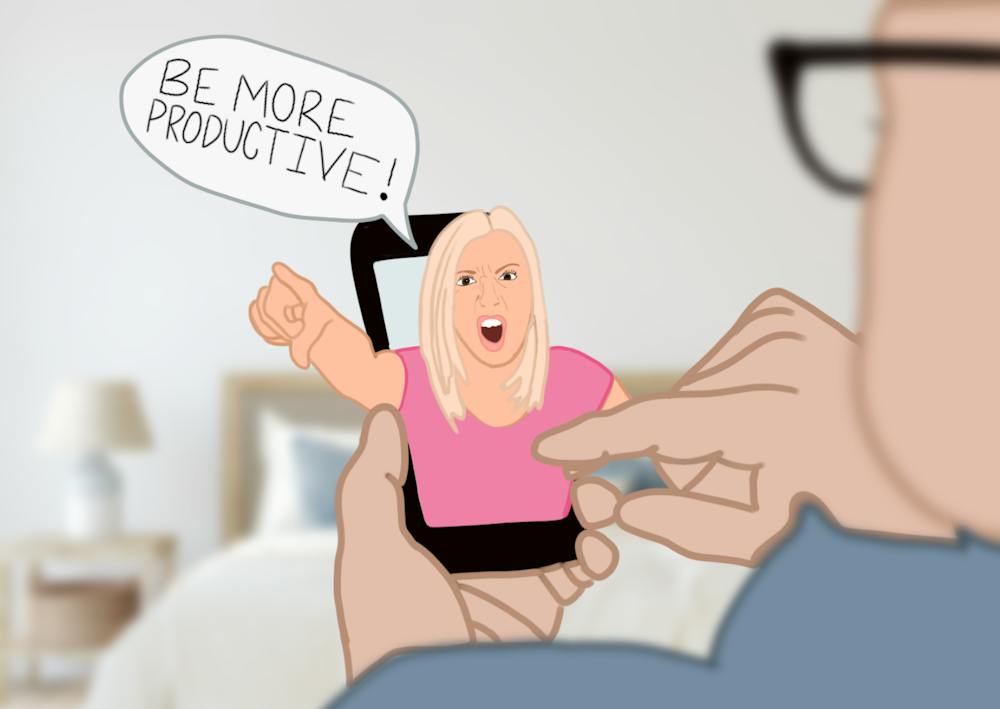
“Rise and grind!”
Another semester rolls around, and the race to master it all begins again. Days filled with ocean swims and time with friends dissipate with the summer heat. In their place comes a jam-packed agenda that leaves us wishing there were more than 24 hours in a day. College students are expected to balance classes, meetings, extracurricular activities, part-time jobs and internships, all while finding time to network and complete graduate school applications.
With so much to do in so little time, self-care often falls to the bottom of a student’s priority list.
The constant need to stay busy can quickly grow into replacing dinner with a protein bar and sleep with another energy drink. We perceive this constant hustle as a badge of honor, one that showcases our commitment to success. We even crown ourselves “academic weapons” because we’ve been conditioned to believe that staying up until 3 a.m. completing homework is something to be proud of.
Even much-needed rest days come with a layer of guilt, as though taking a break means falling behind. Instead of catching up on a comfort show or grabbing dinner with a friend, we manage to squeeze another responsibility into an already tight schedule.
This is the reality of a hyper-productive culture that constantly encourages us to work toward unrealistic standards and consistently leaves us feeling inadequate.
Living in the digital age, college students have become especially vulnerable to toxic productivity trends.
Our social media feeds are filled with “day in the life” posts that subtly suggest we should be working harder, while classmates our age flaunt their success and impractical, idealized routines. In response, we fill our days with endless to-do lists and activities, feeling additional pressure from productivity influencers. Overworking has become glorified.
This mindset contributes to burnout. According to Dr. Mark Travers, a licensed psychologist, “Burnout is not just a phase—it’s becoming the norm for much of Gen Z.”
Many college students, myself included, have lost sight of our own visions and passions in the name of productivity. Our self-worth becomes measured by the number of tasks we complete in a day. The pressure to stay ahead fuels constant exhaustion and burnout, leaving us running on fumes.
It’s important to pause and ask ourselves: Are we truly maximizing our days or stretching ourselves too thin?
To avoid burnout, we must move away from toxic social media comparisons and remember that life exists outside of productivity systems. Making memories with friends, traveling and simply being present with others without an expectation of achievement allow us to grow into well-rounded individuals. Stepping outside of the productivity bubble has helped me explore genuine passions and build healthier relationships.
I’ve avoided the rabbit hole of hyper-productivity by learning to understand and acknowledge my limits. Doing so has helped me stop comparing myself to others and recognize my personal strengths. I have also created a system where I set aside time each week for family, calls with friends and hobbies that bring me joy—not ones that simply appear productive.
As a natural overachiever, each semester can feel like the start of an endless to-do list, accompanied by the pressure to maximize every minute in hopes of not falling behind. But success does not have to mean doing more. Sometimes, it means knowing when to step back, make space for the people and experiences that matter, and recognize that everyone's journey will be different.
The goal should not be to become the most productive version of ourselves. It should be to become a version of ourselves who has the time and energy to enjoy the life we are working so hard to build.
Tajayda Roomes is a writer for The Setonian’s Opinion section. She can be reached at tajayda.roomes@student.shu.edu.


