
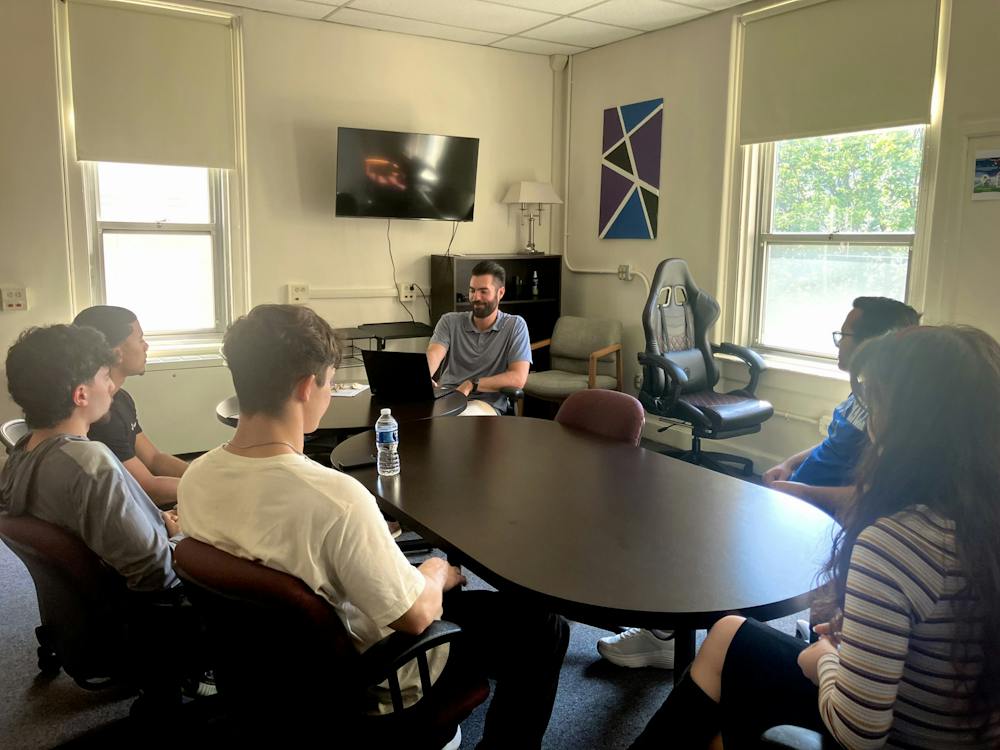
Counseling and Psychological Services (CAPS) launched the Anchored Together Fantasy Football league (ATFFL), which combines fantasy football with open conversations about mental wellness, with the ultimate goal of encouraging personal growth throughout the football season.
The league introduces a new structure for mental health programming, built around an activity students may be familiar with and branching away from traditional group therapy programming. Students will manage or co-manage a fantasy football team while attending weekly meetings combining league activities with CAPS-facilitated discussions, from Sept. 1 to Jan. 10.
Brendan Sullivan, staff psychologist at CAPS, said the league was designed to reduce the stigma around mental wellness conversations by using fantasy football as its focus.
“We were looking for ways to meet students where they are with programming,” Sullivan said. “Fantasy football was an accessible group activity students have familiarity with.”
Sullivan explained that the league is not intended to replace or mimic individual or group counseling. Rather, it is an outreach program designed to give students an alternative way to engage with CAPS and their peers.
The program is part of CAPS’ effort to expand mental health outreach beyond “traditional” counseling, such as individual or group therapy, and is inspired by outreach programs at other universities. Sullivan said CAPS has become increasingly interested in incorporating games and recreational activities to engage students, pointing to its own previous outreach programs such as “The Adventure: Gamified Therapy Group.”
“In recent years, gamified mental health therapy has become more popular,” Sullivan said. “An example would be playing [Dungeons and Dragons] to run group therapy.”
While fantasy football provides the structure for the program, the league creates a comfortable environment for students to discuss topics such as friendship and belonging, emotional regulation, motivation and goal setting. The meetings will also focus on trades, working the waiver wire and discussing league results.
“We selected these topics based on what we expect to come up from participating in Fantasy Football,” Sullivan said. “These include digital wellness, the social aspect [of social media], interacting with technology and decision making.”
Discussions at the league touch on topics such as digital wellness, which may examine students’ relationships with technology and screentime habits. While fantasy football may not have an obvious, direct correlation to digital wellness, it requires phone usage to maintain the fantasy team, opening up conversations about intentional technology use.
Of the topics the program covers, Sullivan identified friendship and belonging as especially relevant to all college students.
“Loneliness is a normal reaction to being in college,” Sullivan said, “The best way to combat social loneliness is to be social.”
For students, the shared interest in fantasy football drives the league’s appeal, with many looking forward to managing teams with their peers. Najati Salim, a junior biology major, said he decided to join to spend time with friends while participating in an activity they all enjoy.
“I love playing fantasy football because it gives me something to look forward to on the weekends,” Salim said.
While the activity drove his interest for the league, Salim said he sees the competitive aspect of fantasy football as an opportunity to learn how to handle setbacks, acknowledging the significance of the program’s connection to mental wellness.
“There could be weeks that your team is down and only has a 5% chance to win, but somehow you overcome the odds and end up winning,” Salim said. “You learn how to be resilient.”
Salim said that students can sometimes have difficulty finding spaces where they can openly discuss stress because of the stigma surrounding mental health. However, he said the league could provide a forum for those conversations.
“I believe that this club could be [an] open space to talk,” Salim said. “Everyone here is social and loves every aspect of football.”
Abel Chong, a junior biology major, also joined because of his interest in football and fantasy leagues, but said he was looking forward to the community the league would provide and the opportunity to discuss mental wellness.
“I was looking forward to meeting new friends who share the same interest,” Chong said, “since football is something I really enjoy talking about.”
Chong said fantasy football can also teach students to handle stress, disappointment and setbacks as managing a team requires managers to adapt when circumstances do not go as planned. Participants must deal with unexpected injuries and poor performances while continuing to make decisions each week.
The league’s backdrop of fantasy football creates a relaxed setting that allows these once uncomfortable conversations to flourish, according to Chong.
“Fantasy football can help with mental health conversations because it gives people an easy conversation started based on something they already enjoy,” Chong said. “It can be much harder to immediately open up to someone about personal problems, so having a shared interest can make it easier to become comfortable with others first.”
Christopher Adams, a freshman accounting major, said fantasy football was the primary reason he joined the league, as he was looking to meet other students who shared his interest in the activity. This year marks his third year participating in a league. Reflecting on his experience, Adams said the activity can provide lessons in determination and stamina.
“Fantasy football teaches you that no matter the setbacks, you still always have a shot at greatness,” Adams said. “It takes people’s minds off depression and anxiety and lets them focus on watching a game we all love. It makes people happier when players do good, and it’s fun to talk some smack.”
The ATFFL is open to students with all levels of fantasy football experience. CAPS will assist students who are unfamiliar with the game, with an emphasis on creating a fun and supportive environment.
Students may earn participation points that can be used toward giveaways and weekly challenges, encouraging them to continue practicing wellness beyond the league.
CAPS will use student participation and feedback to inform future programming. Sullivan said the department remains open to developing future programs around the activities students are interested in.
Students looking to join the league may contact Dr. Brendan Sullivan for more information about weekly meetings.
Elizabeth Maria Churchill is the assistant editor of The Setonian’s News section. She can be reached at elizabethmaria.churchill@student.shu.edu.


