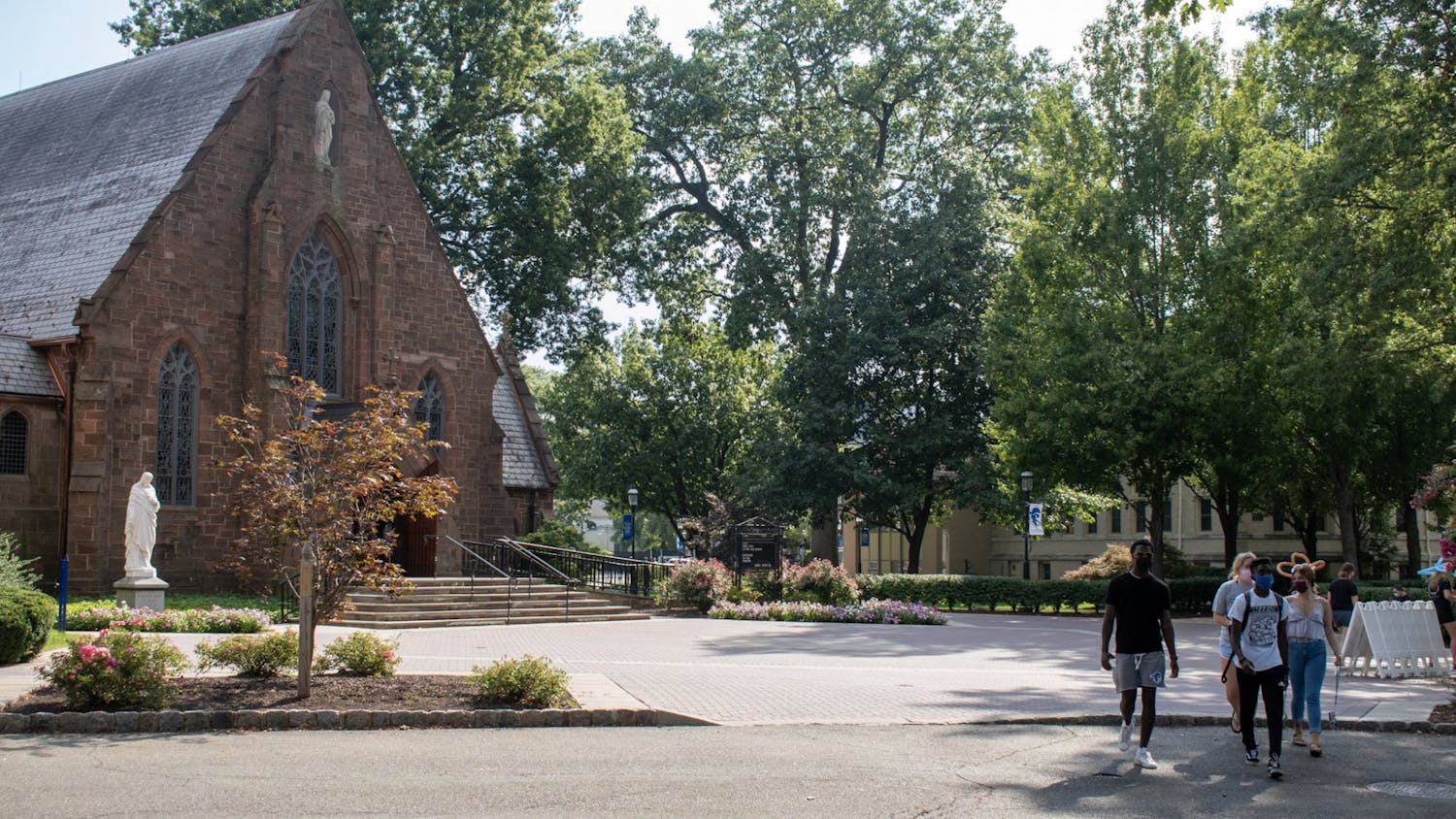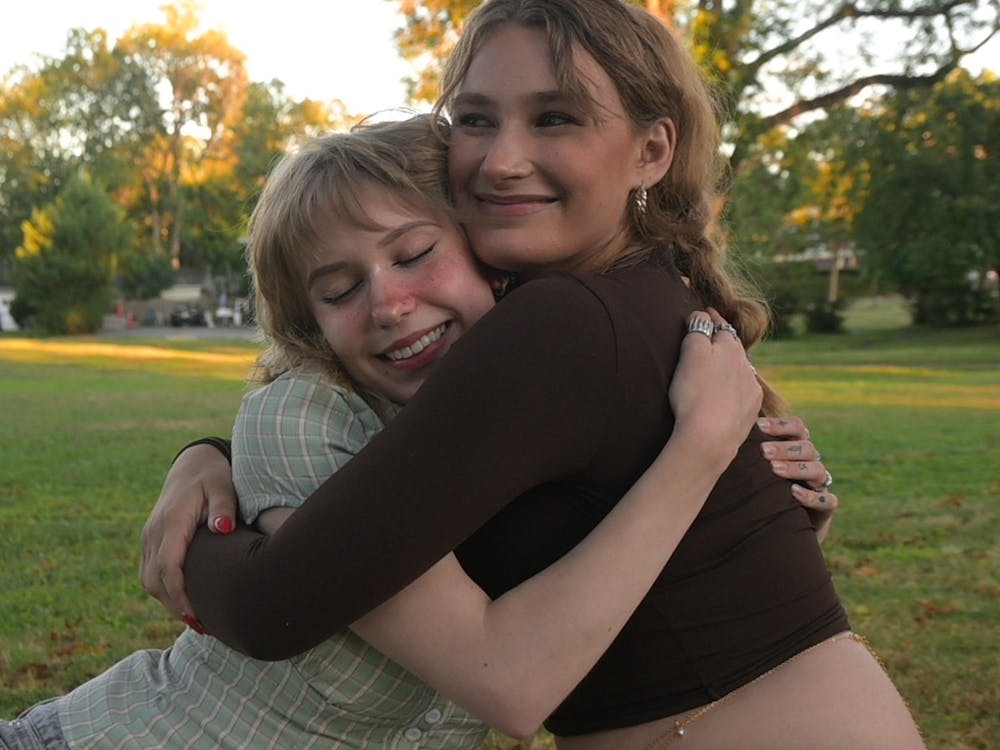
As national optimism sinks to its lowest level in nearly two decades, Seton Hall students are balancing anxiety about politics, affordability and the job market with personal hope, ambition and resilience.
A 2025 Gallup poll found that just 59.2% of American adults expect to live high-quality lives in the next five years, marking the lowest figure since the survey began nearly 20 years ago. Ratings fell 3.5% from 2024 and dropped 9.1% since 2020. The study included interviews from all 50 states and the District of Columbia.
With optimism waning nationwide, it raises the question of what the newest adults’ perspective of their futures are.
A New York Times article identified four major concerns shaping college students’ outlooks: affordability, relationships, the job market and politics. For many SHU students, these same pressures loom large, influencing how they envision their futures.
Job Market and Financial Anxiety
For some students, career uncertainty and rising living costs weigh heavily.
Raphael Rivera, a senior data analytics and information technology major, rated his optimism at three out of ten.
“These companies I’m applying to are not getting back to me,” Rivera said. “I think it’s across the generation, because I saw a report that said 41% of recent Gen Z graduates are unemployed, which is spooky.”
In December 2025, the Federal Reserve Bank of New York reported that while the unemployment rate for recent graduates stood at 5.3%, the underemployment rate–working in jobs that do not require college degrees–was around 41%.
Rivera said financial pressure compounds the stress.
“I work part-time right now, and I realized being in a career like retail will not cut it for me personally,” Rivera said. “Knowing I have to pay for insurance and debt alongside all of my expenses, it’s a lot.”
Michael Carney, a freshman accounting major, expressed similar anxieties, rating his optimism a five out of ten.
“Everything is getting more expensive, and so you need more money to purchase the things that you want, but you can’t do that without a good job,” Carney said.
Senior marketing major Angelo Avila said his job-related anxiety centers on fairness and stability.
“My anxiety for jobs revolves around making sure I get what I am worth and not just jumping on my first offer, but I think our current political situation is down in the dirt and I really hope it doesn’t continue,” Avila said.
Micole Murad, a junior biology major, added that social media often amplifies financial stress.
“There’s a lot of TikTok posts saying it’s hard to find jobs,” Murad said. “But it’s everything – being black, being a child of immigrants— it’s just a lot.”
Politics, AI and Societal Uncertainty
Beyond economics, political tension and technological change also weigh heavily on students’ minds.
Rivera said broader economic and political conditions further diminish his optimism.
“Jaden Smith was right, we should have talked about the political and economic state of the world growing up,” Rivera said. “Now Gen Z is going into adulthood in a crappy situation.”
Avila echoed similar frustration.
“I think our current political situation is down in the dirt and I really hope it doesn’t continue,” he said.
Artificial intelligence (AI) also emerged as a major concern. Jared Severe, a junior theater and visual and sound media major, said the rapid growth of AI threatens job security.
Severe criticized the “horrible standards” around AI.
“We have to do things [differently] to be in a certain workspace and not have jobs taken from you,” he said.
Norah Leuwerke, a sophomore economics and modern language major, said worries about AI, affordability, political discourse, climate change and social media make her more pessimistic.
“I see all of that and think, ‘Why me, why now, why do we have to live in this time?’” Leuwerke said. “It just makes you take a step back.”
Adaptability, Resilience and Personal Growth
Despite uncertainty, many students expressed cautious optimism rooted in adaptability and personal development.
Carney said his first semester at SHU helped him build essential skills and support systems.
“I’ve learned a lot from other people,” Carney said. “I think the people I surround myself around are really helping me.”
Leuwerke echoed Carney’s sentiments, attributing her hope in the future to her supportive family.
“I can’t fail too hard if I have them in my corner,” Leuwerke said. “I am really grateful for that.”
Rivera said college taught him flexibility and resilience.
“Knowing that things didn’t work out, but realizing that rejection is just redirection, I have a feeling I will be where I am supposed to be,” Rivera said.
Severe said adapting to change is critical. “With AI we’re not going to destroy it, we just have to work around what we have,” he said.
Murad added that navigating emotional struggles has helped her to grow.
“Something I have to work on is when there are those days that feel like impending doom, I need to learn how to deal with them better,” Murad said.
Murad said the struggle gives her motivation. “It’s a double-edged sword,” she said.
Hope, Ambition and Looking Forward
Arden Rosemond, a freshman nursing major, said knowing she is doing the best she can makes her optimistic.
“For how I’m doing, I think I’m pretty good,” she said.
One word Rosemond said she has for the future is “hope.”
“I feel like we’ll get out of hard times,” she said.
Like Rosemond, Severe said he thinks the future is bright.
“We are not always going to be down. We are the difference makers, so we could make something positive,” Severe said.
Similarly, Amanda Brown, a sophomore biology major, and Valentina Polidoro, a sophomore finance major, said they are optimistic and “excited” about their futures.
Brown and Polidoro’s optimism stems from career-focused perspectives.
Brown said her desire to pursue medicine makes her current struggles worthwhile.
“I think it’s because I want to work in a field that helps people, I want to be a doctor, so hopefully being able to make a change in the world is great,” Brown said.
Polidoro said she feels like there is a light at the end of every tunnel and that she is motivated by her future impact.
“I’m only scared of failing, and I’m terrified that the path that I want won’t work out,” Polidoro said. “But I know when I get there, it will help so many.”
Michael LaVista, a sophomore political science major, rated his optimism an eight out of ten, attributing it to the “consistent hard work in everything I do: my schoolwork, my faith and my other work.”
LaVista said he feels confident in where he will be in five years’ time. “I try to stay optimistic,” he said.
“If you are more pessimistic, it will not help you get through the hardships you are going to face,” LaVista added. “In this generation, people try to find more negatives and excuses to their problems, instead of trying to actually solve them.”
Senior theater major Justin Del Valle said community gives him hope.
“I feel like we’re all just pushing through together,” Del Valle said.
Del Valle disputed critiques of Gen Z, claiming the generation is scrutinized more than previous generations.
“We all have a significant sense of knowing what’s wrong and what’s right. I think there are more people growing and knowing what’s wrong, so if that continues, my hope for the future is sound. But we can only change things if we ourselves are able to change,” Del Valle said.
Del Valle said he hopes the future will be “reformative.” He said he hopes people look at what has not worked throughout history and can create paths towards a successful tomorrow.
Solomon Lee is the advertising manager for The Setonian. He can be reached at solomon.lee@student.shu.edu.