
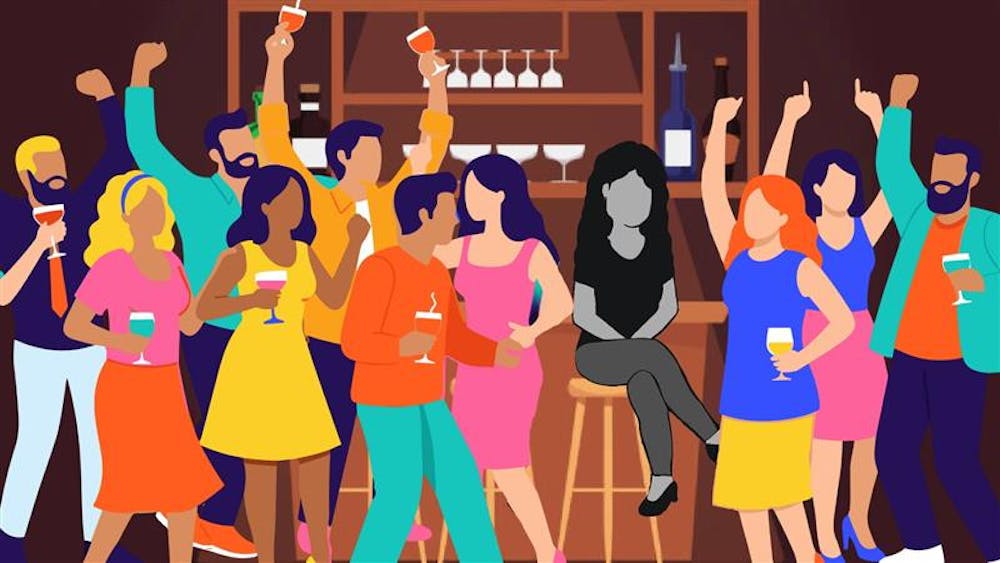
We live in a country where young adults can go to war and vote at 18, but cannot drink alcohol until they’re 21. With that comes a certain reverence around drinking; in a person’s teen years, that first illegal drink seems to be a “rite of passage,” especially for those first starting college.
But what about those—like me— who decided at some point not to drink?
My rationale for not drinking can’t be summed up by just one reason. For me, I have no desire to give up full control of my actions, and imbibing takes away a person’s inhibitions from the very first sip. Not to mention the hangovers and, more seriously, the potential long-term health impacts.
But what concerns me most is that alcoholism, like many diseases, can be passed down from one generation to the next. A family history of alcohol use disorders may increase the risk of a genetic predisposition to developing an alcohol use disorder, with risks heightened for parent-child transmission. As someone who witnessed the impact of alcoholism on multiple family members firsthand, other than sips of wine in Italy and a taste of beer in England when I was 18, I think it’s pretty needless to say that I’ve stuck to mocktails since then.
My decision is quite atypical in America, at least on American college campuses. Binge drinking is common for college students ages 18 to 22. The scary part about this is that it’s proven to play a role in thousands of sexual assaults and date rapes. In addition, alcohol consumption is highest among students living in fraternities and sororities, where hazing runs rampant: 73% of students involved in social fraternities or sororities experience behaviors meeting the definition of hazing in order to join or maintain membership in their group, and the most common hazing behaviors include participating in a drinking game (53%) and drinking large amounts of alcohol to the point of getting sick or passing out (26%).
With all of this being said, I have complete respect for people who drink, and I am completely comfortable being around people drinking. But I do believe it’s important to recognize the detriments of the practice and the drinking culture present at universities around the country.
Personally, I’m also just sick of people who are uncomfortable around me because I don’t drink, even though I’ve given them no reason to feel uncomfortable and am totally accepting of their choice to consume alcohol. Not to mention, it’s exhausting having people always question why I don’t drink when I don’t question them at all.
When I started at Seton Hall in 2022, I didn’t advertise my not drinking. When friends and roommates asked me to go to parties with them on the weekends, I politely declined. In most cases, I wasn’t met with pressure or judgment, thankfully, but it was isolating being one of the only ones in the dorm on Friday and Saturday nights. Eventually, people started to catch on that I flat-out wasn’t drinking alcohol at all.
In one case my freshman year, I was asked why I didn’t drink, and I responded by saying there was a family history that I didn’t want to repeat. The response I got back was, “Well, I believe you make your own relationship with alcohol.” Though this person probably had good intentions, I felt that this invalidated my experiences. They also said this, not considering the fact that I, like many, had endured emotional and mental abuse at the hands of intoxicated family members and had watched them struggle through countless rehabilitation programs, never an end in sight.
It only got worse my sophomore year.
A friend and I got trapped in a conversation with someone who lived on the same floor as us, where they told us something along the lines of “You should get addicted to drugs, it’s fun.” After I got over my initial shock, I thought that in that moment, maybe they were under the influence themselves.
Believe it or not, the isolation I’ve experienced as a non-drinker has continued even after turning 21. Many (former) friends mistakenly believed that if they invited me out to the bars, I would bring them down or judge them. So, they simply wouldn’t invite me, perpetuating this toxic stigma.
These situations should have never happened, but I know I’m not the only one who’s had similar experiences. It’s important to validate the experiences we non-drinkers have and include us in activities that may involve drinking, because for many non-drinkers like me, we don’t need the alcohol to enjoy those types of outings.
Still, it’s important to acknowledge that our generation is actually starting to drink less. Young adults had already become less likely to report drinking alcohol a decade ago, but that trend has only accelerated, with the rate falling from 59% in 2023 to 50% today. On top of that, conversations around non-drinking are increasingly becoming relevant; there is a growing number of adults who are “sober curious,” or interested in cutting back on alcohol without necessarily reaching full abstinence. This has resulted in things like the “Dry January” campaign.
These are all positive developments, but people should still be aware of the impact alcohol can have and keep those effects in mind when interacting with non-drinkers. The conversation around the decision not to drink is expanding, but we still have a long way to go in fostering an open and honest dialogue.
Jacqueline Litowinsky is a copy editor and the assistant editor of The Setonian’s Social Media. She can be reached at jacqueline.litowinsky@student.shu.edu.


